
Type of applicant company
品牌方
Country
中国
Company Website
无
Images
Brand of the Product
MAHORA
Designer Name
MAHORA Team
Position of Designer
无
Target Consumer
The target demographic is individuals aged 18-30, who seek mild intoxication but have low tolerance for strongly alcoholic tastes. They are passionate about collecting trendy toys or similar hobbies and exhibit a strong desire for self-rewarding consumption.
Distribution Channels
电商 E-commerce; 大型商场 Shopping Mall; 小型商超和便利店 Supermarket & CVS
Positioning
大货消费品 Mass Production
Design Story
In recent years, significant events have occurred in the domestic spirits market, exemplified by the launch of products from the Laizhou Distillery. We predict that the next decade will be the era of spirits localization, and a spirits revolution will sweep across China's beverage market, much like the craft beer revolution of the past ten years. So, what changes will occur in this nearly hundred-billion-yuan market, currently categorized under the term "foreign liquor"? We believe that the local supply chain will undoubtedly rise rapidly, presenting immense opportunities for domestic spirits brands. The term "foreign liquor" will disappear within three years, just like "foreign cars" and "foreign matches" did in the past. Chinese consumers will gradually demystify foreign spirits, and the notion that "imported spirits are inherently better" will fade away.
Against this backdrop, we have embarked on the Mahora project. Therefore, the brand positioning, design, and packaging of our first miniature series are integrated. Based on this, our design goal is to create a spirit that strips away consumers' preconceived notions of "foreign liquor" and the traditional symbols and visual impressions associated with it. We also have a vision to market globally, so our brand and products must represent the greatest common denominator of human drinking culture. Our brand should be rooted in the intersection of Eastern and Western cultures, drawing inspiration from humanity's shared cultural memories.
Drinking is about emotion. Without alcohol, humanity would face more problems and disasters. Upholding this belief, we aim to map shared human emotions into each bottle of our spirits.
Thus, our design language must be an organic fusion of Eastern and Western styles, and it should be emotionally rich, which also applies to our color palette. We want to be a friend to our users—someone they can confide in. We assume we will accompany them long-term, so there must be many details for users to gradually discover. We are committed to communicating with our users, especially through our miniatures, which are ever-changing and open to co-creation.
We cannot ignore the product form of miniatures itself. In recent years, miniatures have quickly gained popularity through social networks. They are the vanguard of "foreign liquor" consumption in China, unlike overseas markets where the trend has been from large to small; here, it's from small to large. From a broader perspective, miniatures bear the responsibility of popularizing the domestic spirits market. Novice users, attracted by the cute little bottles on the shelves, will first ask: "How do I drink this?" However, the miniature's extremely limited display area makes user communication a challenge; its small size and numerous competitors also make effective shelving a difficulty.
Making the product speak for itself is a key consideration in our design.
Highlights
1. Innovative Bottle Shape Design
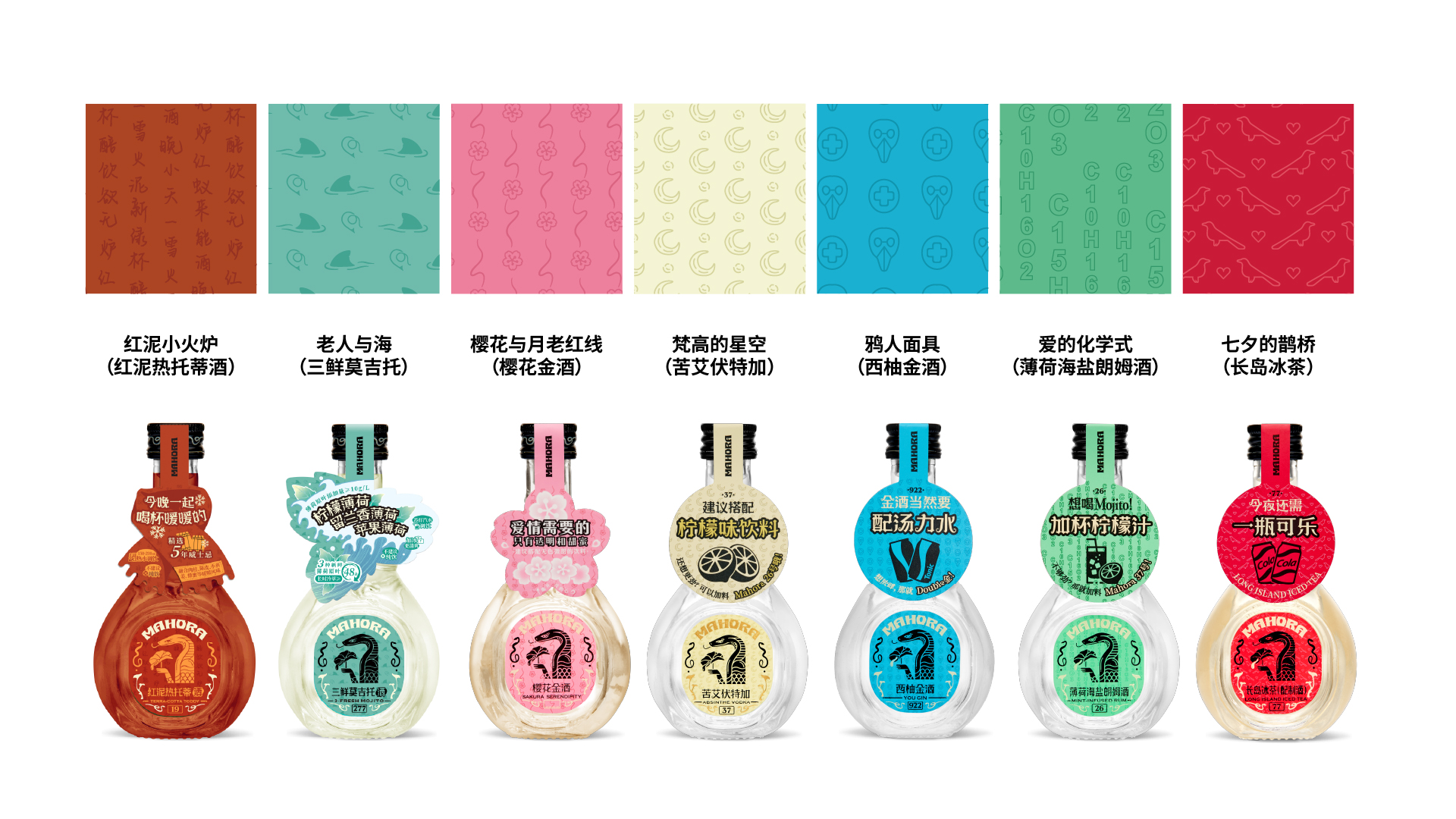
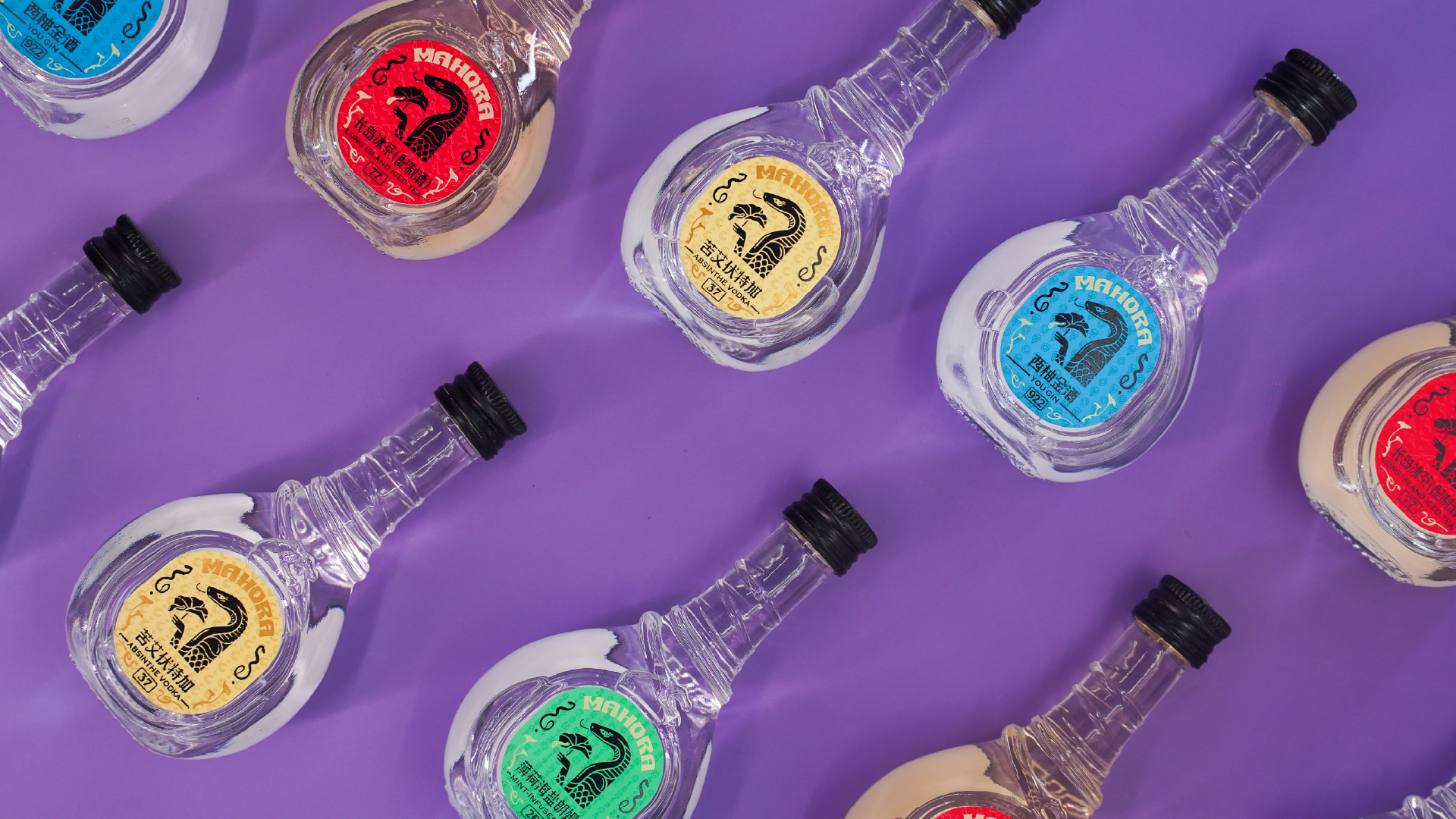
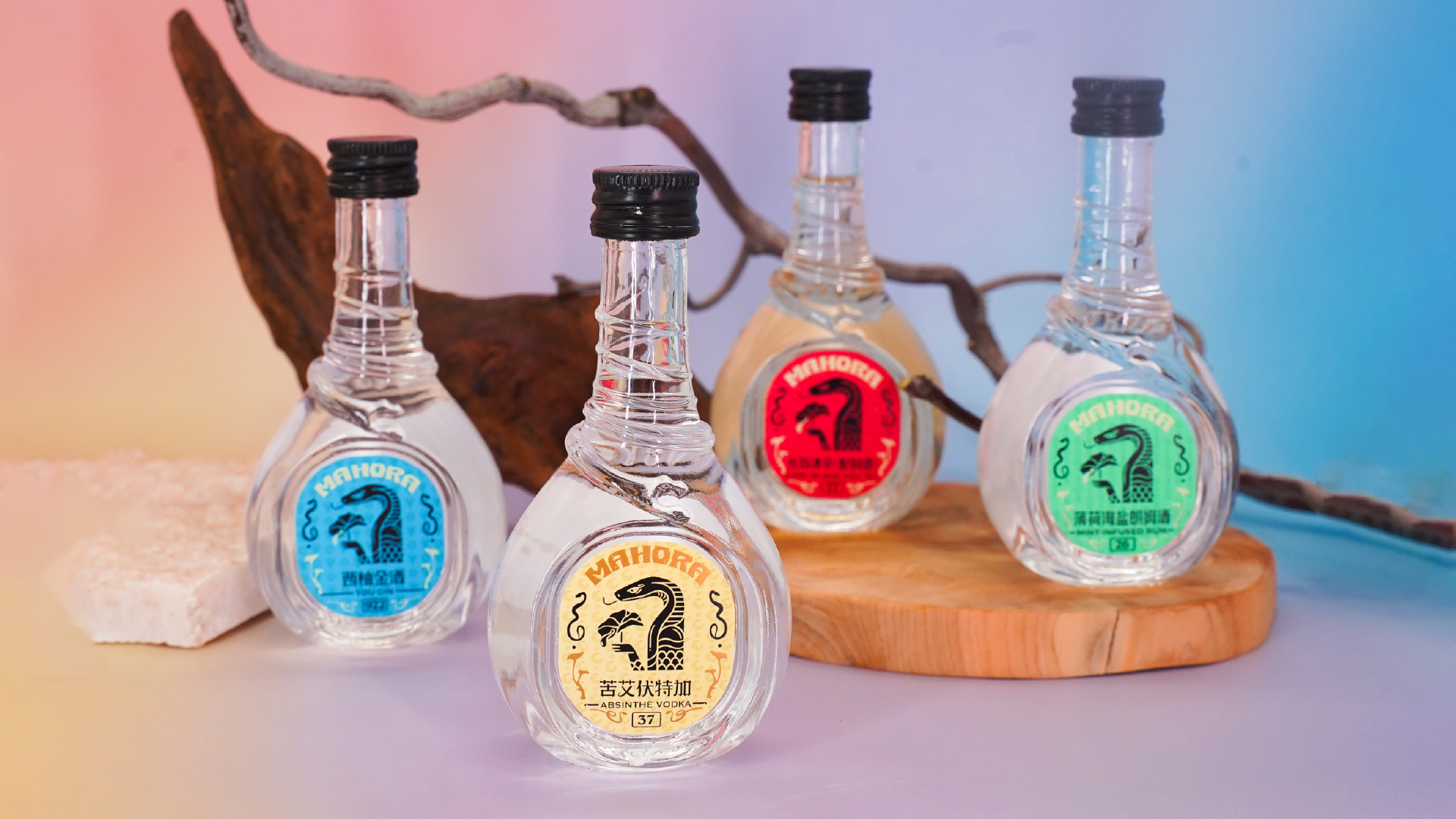
The brand symbol—a snake—is integrated into the neck of the bottle, creating a subtle, mysterious, and exotic fusion of Eastern and Western styles that stands in sharp contrast to traditional foreign liquor bottle designs.
2. Prominent Brand Logo on the Label
The brand logo features Mahora’s Great Serpent Deity—Mahoraga—holding a lotus leaf (symbolizing a cocktail cup), with a droplet about to fall from the leaf (symbolizing the liquor). This imagery leaves a lasting impression.
3. Number + Color + Pattern = Product Story
Each liquor variant is assigned a number, a color scheme, and a background pattern that together form its product story. For example, No. 37 Absinthe Vodka uses a light yellow color scheme and a background pattern of stars and the moon from Van Gogh’s masterpiece The Starry Night—absinthe was Van Gogh’s favorite drink, and he passed away at the age of 37.
4. Bartender Hang Tag
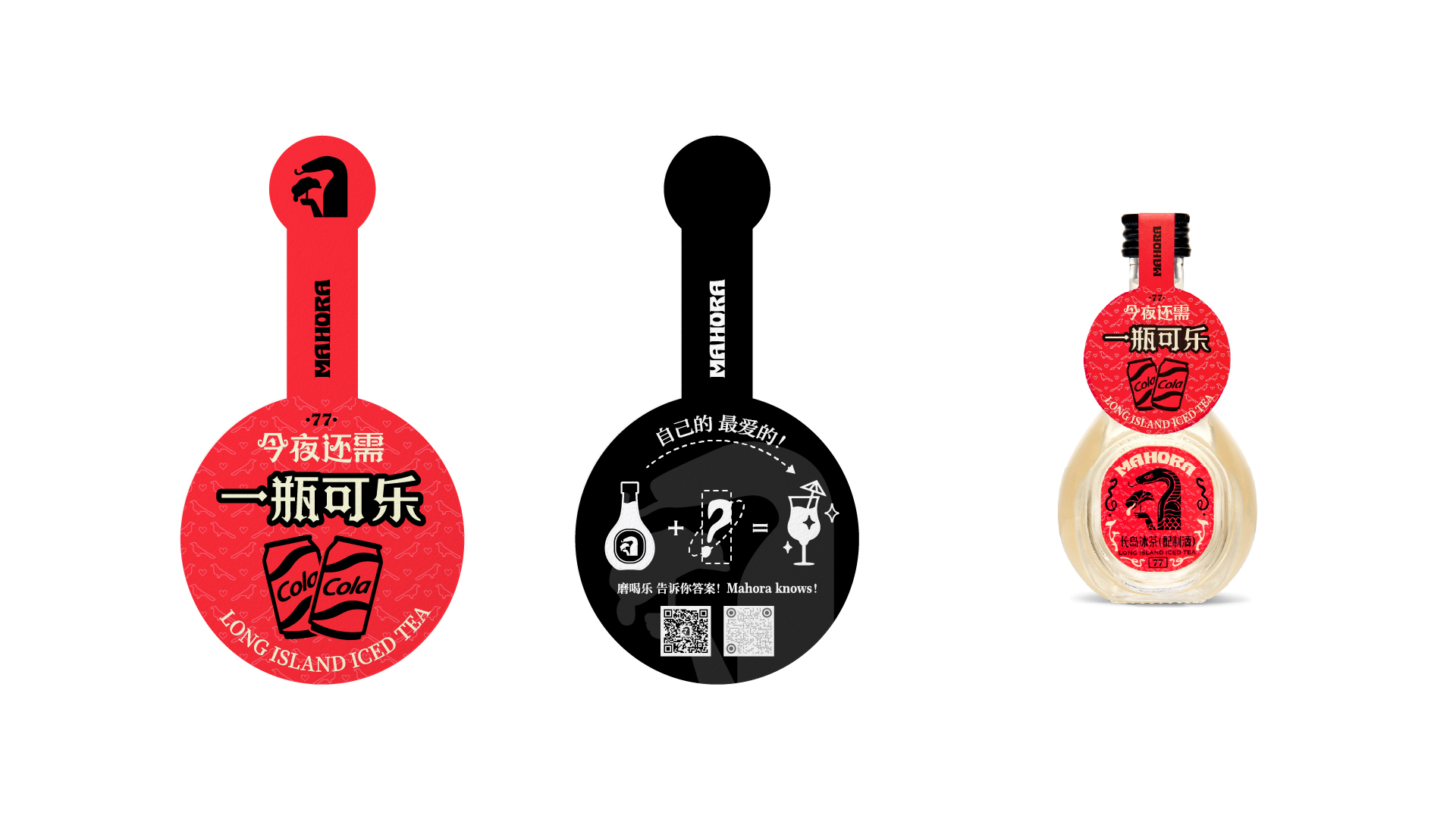
A hang tag dangles from the bottle cap, displaying serving suggestions. On its reverse side, users are guided to scan a QR code to access online cocktail recipes.
Market Performance
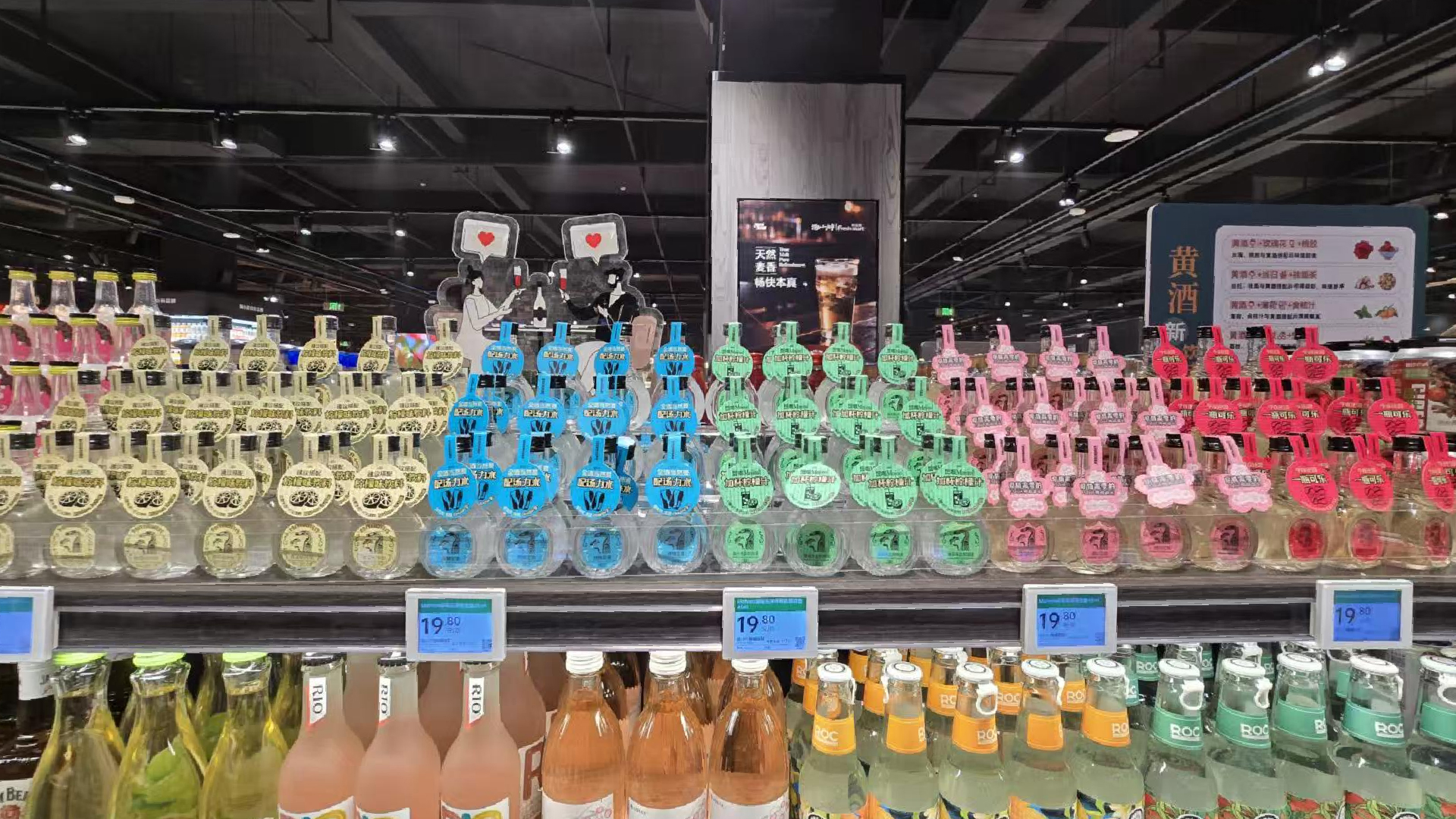
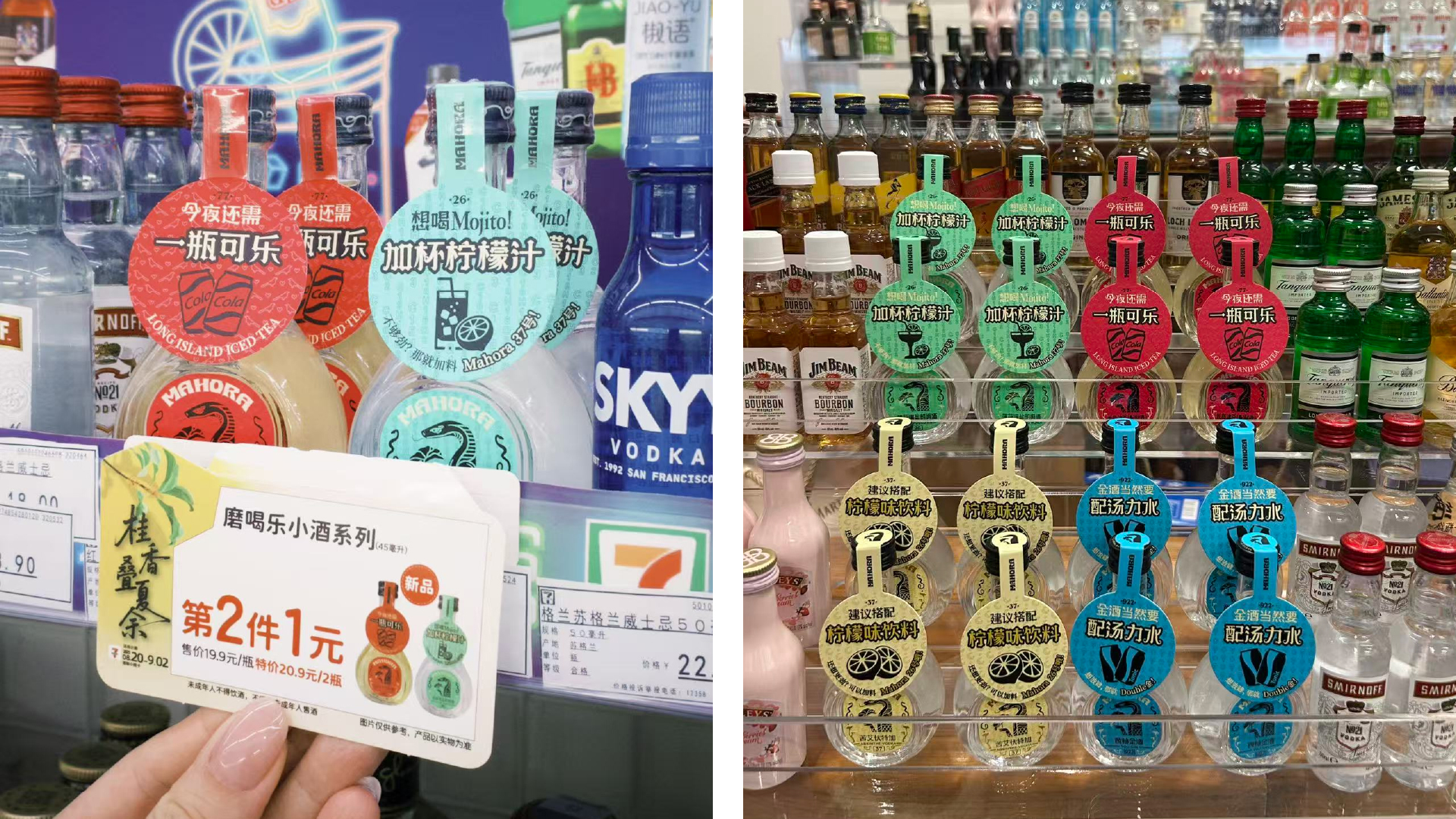
As a new brand, the Mahora product series has demonstrated impressive performance in convenience stores and premium supermarkets. In the vast majority of these channels, we have maintained steady month-on-month growth since the first month of entry, positioning us in the upper-middle tier among similar products. After discussions with procurement and distributor partners, this success is attributed to the combined effect of excellent packaging design and a superior drinking experience.
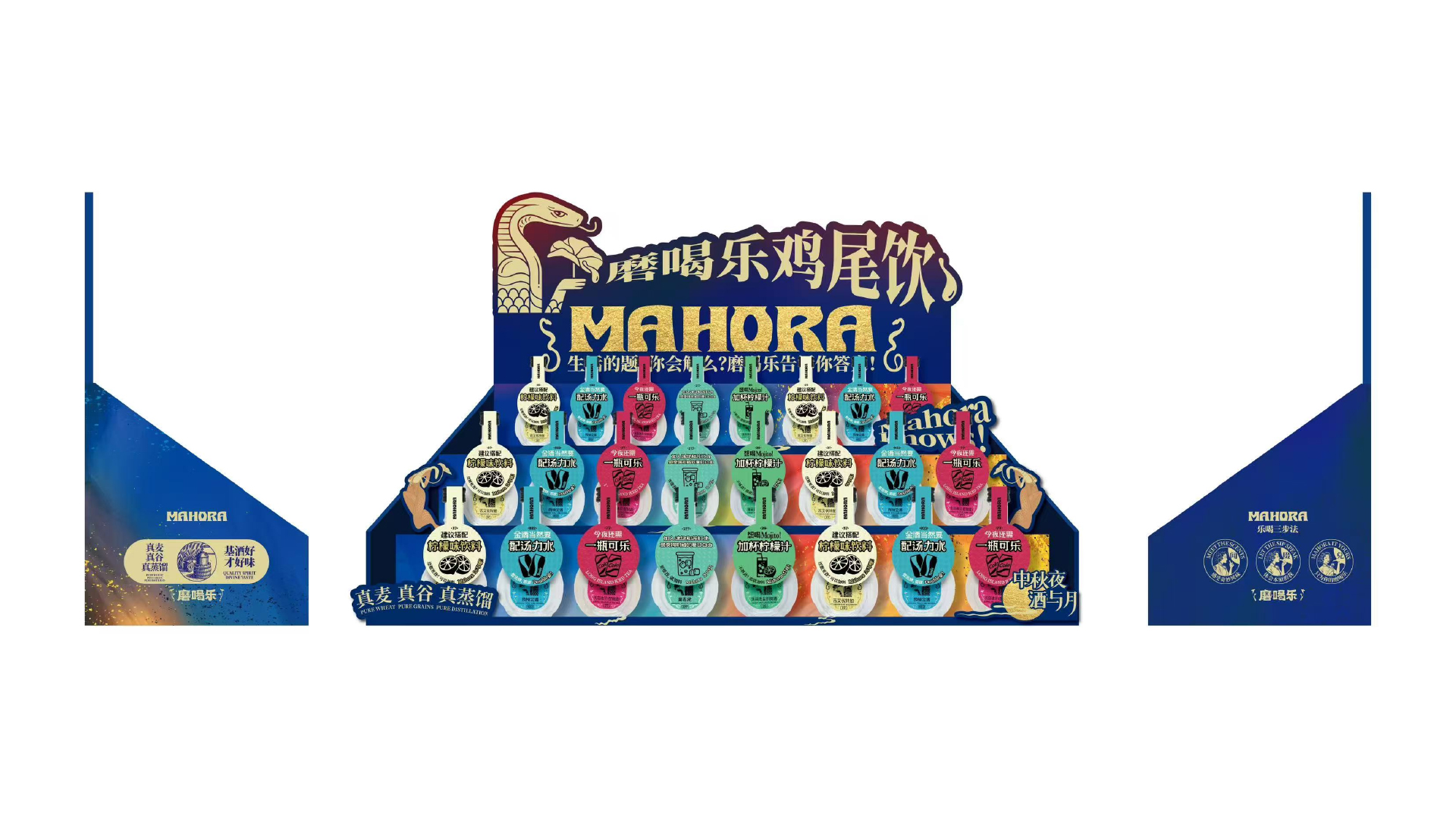
Mahora’s distinctive bottle shape, eye-catching color schemes, and unique hang tags enable consumers to quickly discover, identify, and purchase the product.
Material(For concept works, please choose the material you plan to use)
其他 玻璃
Craft
The manufacturing process for the packaging is mature, with the main challenge lying in the printing of the labels. Due to the small surface area of the labels and our high requirements for printing precision, this has posed significant challenges in actual production. The tiny labels undergo eight distinct processes, with the background patterns, logo, and text all requiring dedicated plates, moving away from the slightly less precise method of full digital printing. Because of the small size, deviations that would normally meet industry standards are unacceptable for our product, as the visual impact of any misalignment is magnified. To achieve a near-perfect result, our supplier partners have upgraded their equipment, production processes, and quality control standards.
Does the design solve the problems that are common across the product category? If so, please explain.
The small size of miniatures, combined with numerous competitors and low product recognition, presents significant challenges. Here is how we address these issues:
1. Differentiated yet Unified Bottle Design
Imported miniature brands typically replicate the shape of their larger bottles, while domestic brands often use generic, off-the-shelf molds. This results in shelves filled with similar square or round bottles. In contrast, we have specially designed and molded a unique "Spiritual Snake" bottle shape that stands out prominently on shelves. All flavors adopt this single bottle design, ensuring maximum visual impact and recognition when multiple products are displayed together.
2. Exclusive Hang Tag Design
The hang tag adds an additional display surface to the product, functioning like a flag that captures the user's attention first. This design element enhances visibility and engagement, making the product instantly noticeable among competitors.
What functional designs of the work have enhanced the user experience?
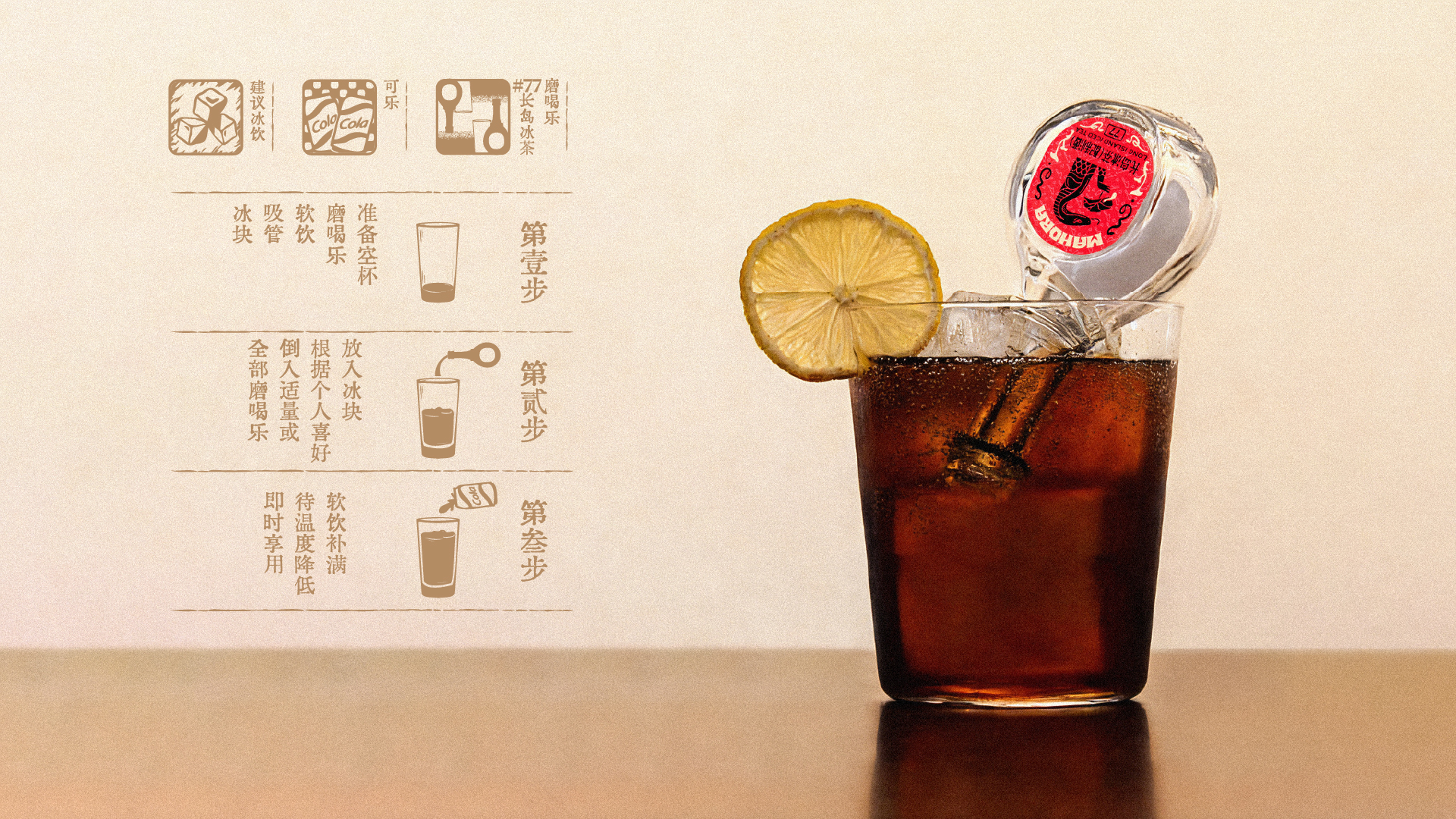
We have specially and exclusively designed the bartender hang tag, with its core function being to provide users with a "safe" drinking suggestion. The biggest question mark for new users when they encounter a miniature is: How do I drink it? What should I mix it with? Will I make a mistake? The front of the hang tag tells users a safe recipe—one that is guaranteed not to disappoint. For example, vodka paired with a lemon-flavored drink; grapefruit gin with tonic water makes a classic Gin & Tonic; Long Island Iced Tea mixed with cola creates the classic Long Island Iced Tea. The back of the hang tag guides users to scan a QR code to participate in the online "Cocktail Secrets"—showcasing more cocktail recipes and encouraging users to share their own DIY creations. The experience is perfect!
Did the design help increase the sales performance of the product? If so, please give related evidence.
1. Procurement Approval Rate
Due to the distinctiveness and high recognizability of our design, our products tend to receive high favorability and approval rates from system procurement teams. Rough estimates indicate an 80% first-round approval rate.
2. Inbound Interest
Since the product debuted on the shelves of our first batch of system clients in July, we have been receiving weekly inbound calls from distributors and system clients actively seeking collaboration.
3. Positive Feedback from System Clients
According to feedback from system clients, our products demonstrate excellent shelf display performance. The sell-through rate has steadily increased since launch, surpassing the average level of similar products.
Does the work consider sustainability (environmentally or commercially, or both)? If so, please explain.
1. Environmental Sustainability
We have made dedicated efforts in lightweighting both inner and outer packaging, standardizing packaging specifications, and reducing material usage. For instance, we intentionally use water-printed corrugated paper to minimize the use of colored dyes; we prioritize biodegradable materials for labels; and we streamline outer packaging specifications to enhance the economic efficiency of mass production.
2. Commercial Sustainability
We have established a product numbering system with corresponding color schemes, aiming to build the most extensive and exceptional library of miniature spirits flavors. This approach allows us to meet the diverse needs of different regions and customer types to the greatest extent possible. In selecting packaging suppliers, we prioritize companies that provide fair and favorable treatment to their employees.