
Type of applicant company
品牌方
Country
中国
Company Website
中文:https://www.mengniu.com.cn 英文:https://www.mengniu.com.cn/en/index
Images
Brand of the Product
MENGNIU
Designer Name
Packaging R&D Department, Product R&D Center, Ambient Business Unit, Inner Mongolia Mengniu Dairy (group) Co.,Ltd
Position of Designer
无
Target Consumer
Vegetarians: Vegetarians are individuals who follow a diet that excludes animal-based foods such as red meat, poultry, seafood, eggs, and dairy. Those who completely avoid all animal-based foods and their products are referred to as strict vegans, while those who consume eggs and dairy are known as ovo-lacto vegetarians. Since their diet lacks animal-based foods, improper meal planning may lead to insufficient intake of nutrients such as vitamin B12, n-3 polyunsaturated fatty acids, iron, zinc, and protein, thereby increasing the risk of deficiencies in these nutrients. Light Eaters: The main characteristic of this group is the consumption of small portion sizes or low total calorie intake. As a result, if their food choices are not well-balanced, they may be prone to nutritional imbalances. Weight Management Individuals: A healthy weight refers to maintaining a body weight that supports long-term well-being. Excessive weight often reflects relatively high energy intake or insufficient physical activity, which can lead to overweight and obesity. This significantly increases the risk of developing conditions such as type 2 diabetes, coronary heart disease, and certain types of cancer.
Distribution Channels
电商 E-commerce; 大型商场 Shopping Mall; 小型商超和便利店 Supermarket & CVS
Positioning
大货消费品 Mass Production
Design Story
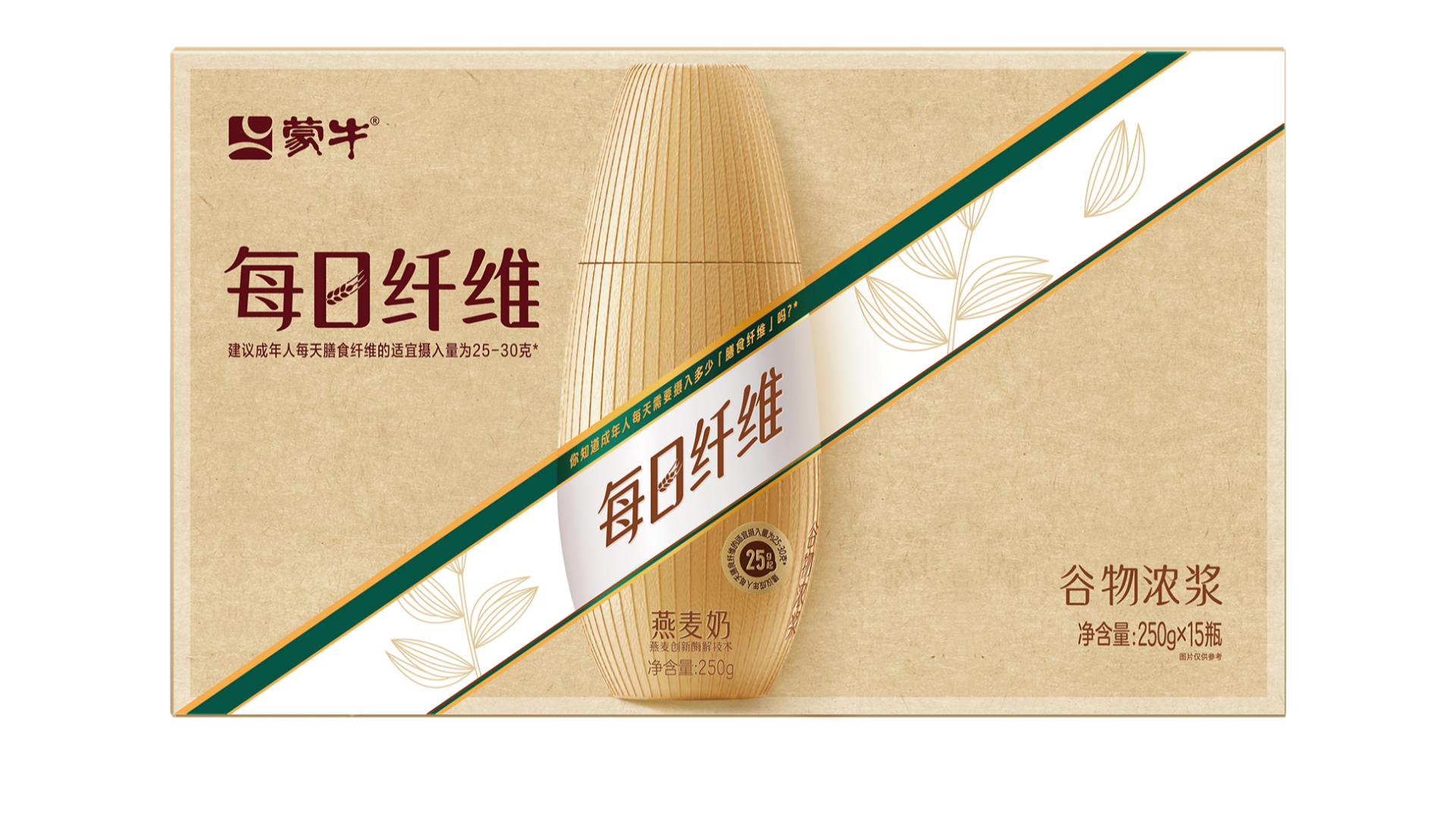
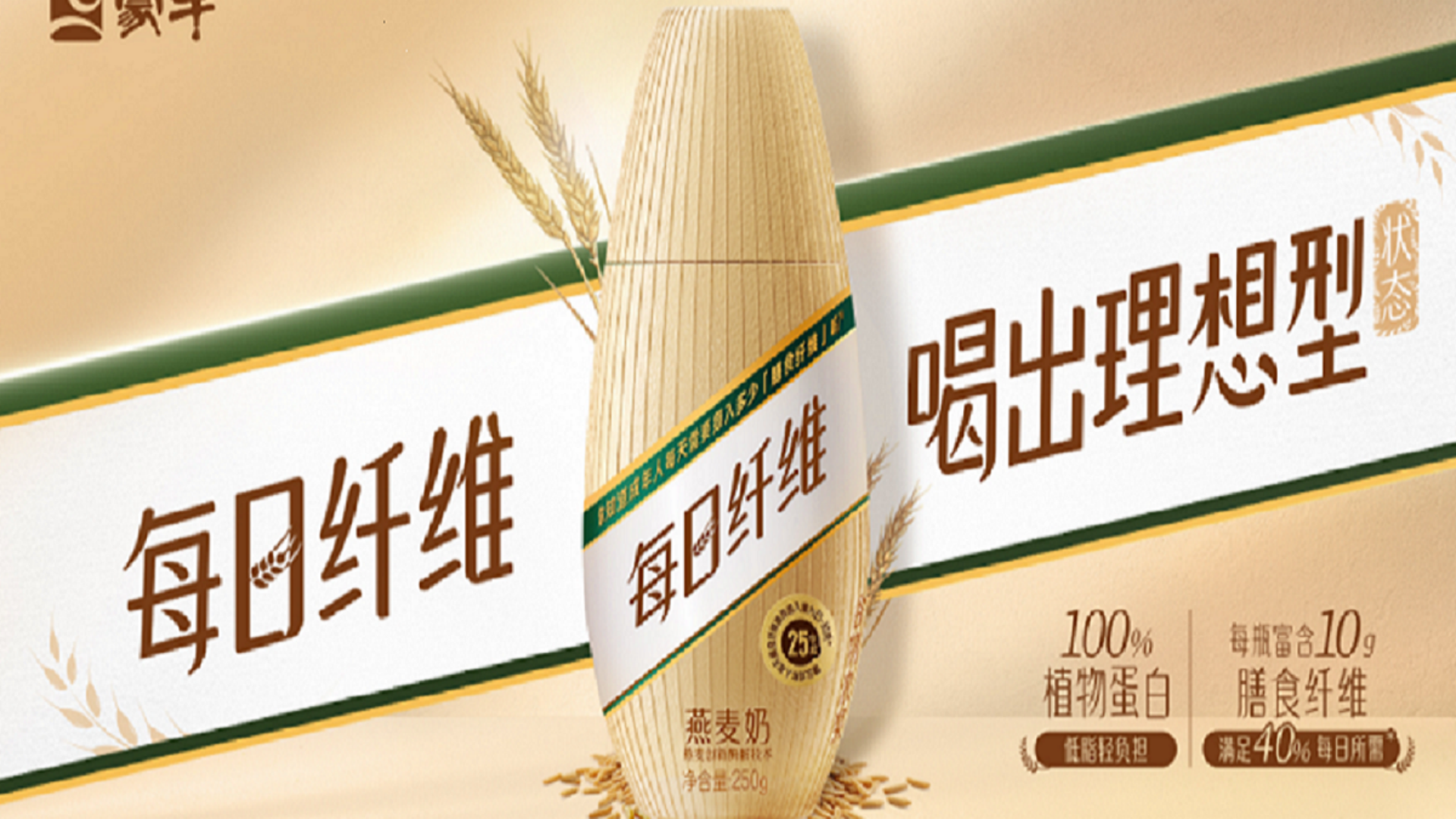
Under the Trend of Health-Conscious Consumption, Dietary Fiber is to Plant-Based Milk What Protein is to Dairy Milk. Consumers inherently associate oats with dietary fiber and firmly believe that oat milk can serve as a source of fiber supplementation. Drawing inspiration from the product's core ingredient—oats—the packaging design of Daily Fiber Oat Milk pioneers a bionic oat-kernel-shaped bottle, the first of its kind in the market.
To achieve this oat-inspired silhouette, the elliptical bottle posed challenges, including blow-molding difficulties due to its shape and production line conveyance issues caused by the reduced base contact area. After three rounds of structural optimization and two iterations of base dimension adjustments, the PET bottle was perfected to ensure mechanical stability and full compatibility with manufacturing processes.
Furthermore, to enhance sustainability, the PP cap and PETG label will incorporate post-consumer recycled (PCR) materials in future iterations.
Highlights
This packaging features a bionic design inspired by the appearance of oat grains. The elliptical bottle body, conical oat-colored cap, and oat-colored label together create an oat-inspired visual identity. The design ensures high shelf visibility and perfectly aligns with the product's main ingredient—oats—delivering an excellent purchasing and drinking experience for consumers.
Packaging Design Innovation: The integrated design of the bottle and cap ensures both aesthetic appeal and user-friendly functionality, providing effortless opening and drinking. Following bionic design principles, the packaging features an elliptical shape for both the cap and bottle body, complemented by vertical striations on the surface—all in an oat-inspired color scheme. This marks the first commercially available oat milk packaging to fully replicate the form, texture, and hue of an oat grain.
Sustainable Material Strategy:
The packaging employs fully recyclable materials.
Ongoing R&D includes: A cap formulation with 25% post-consumer recycled (PCR) content. A PETG label incorporating 30% PCR material
These advancements actively enhance the packaging's circular economy potential.
Market Performance
无
Material(For concept works, please choose the material you plan to use)
PET塑料 PET material
Craft
The lid of the PP material is formed by injection molding; the PE material cap is formed by compression molding; the PET material bottle body is formed by first injection molding the preform and then blow molding. All of the above are widely used manufacturing processes in the industry.
What functional designs of the work have enhanced the user experience?
The use of the outer cap ensures the appearance of the oat grains while making the bottle cap easier to open.
Does the work consider sustainability (environmentally or commercially, or both)? If so, please explain.
The packaging-related materials follow a design for recyclability. At the same time, research is underway to develop a formula for the cap that incorporates 25% post-consumer recycled (PCR) material, while the PETG label uses a formula containing 30% PCR material, contributing to enhanced packaging sustainability.