
Type of applicant company
设计机构
Country
英国(总部),中国,美国
Company Website
https://jdoglobal.com/
Images
Brand of the Product
Big Hug
Designer Name
Dan Bowstead – Design Director, Ray Smith – Executive Creative Director, Rachael Skingle - Strategist, Chloe Platt – Senior Artworker, Alex Bridger Wood – Client Director, Bex Edwards – Junior Motion Graphics Designer, Svala Ragnars - Retoucher, Petter Ogren – Senior Image and Motion Visualiser
Position of Designer
none
Target Consumer
Socially conscious beer drinkers who care about quality, character, and positive impact. Craft beer enthusiasts, festival-goers, and ethically minded consumers seeking brands that align great taste with clear values, spanning both on-trade discovery and mainstream retail audiences.
Distribution Channels
小型商超和便利店 Supermarket & CVS; 杂货店 Grocery; 餐饮&酒店 Restaurants & Hotel; 其他销售渠道 Bars & Tap rooms
Positioning
大货消费品 Mass Production
Design Story
Big Hug has been brewing tasty beer with heart in the UK for over a decade, building a reputation for quality while supporting social causes through selected products. In 2024, founder Matt Williams recognised an opportunity to take this commitment further, with the ambition to evolve Big Hug into a 100% positive-impact business, where every beer brewed contributes directly to people and planet.
To make this ambition real, Big Hug needed a fundamental shift in how the brand showed up in the world. The existing identity lacked clarity and cohesion, with a fragmented range that struggled to communicate purpose clearly or cut through an increasingly crowded craft beer category. While the intent was authentic, it wasn’t immediately legible on shelf or compelling enough to support the brand’s next stage of growth. The challenge was to create belief in Big Hug’s promise of “Brewing For Better”, and to do so in a way that could unlock both cultural and commercial momentum.
JDO was briefed to redefine Big Hug’s identity and brand world, uniting the portfolio under a single, optimistic banner while building a scalable system for growth. The objectives were clear: achieve standout in a saturated market, create clarity and consistency across the range, strengthen credibility with trade and retail partners, and support expansion across on-trade, e-commerce, and mainstream retail listings.
The creative strategy was grounded in Big Hug’s core promise: brew for better, for people and planet. This idea became the organising principle for the entire brand world, ensuring purpose was not treated as a message layer, but embedded into how the brand looked and behaved. The strategy called for a visual language that felt generous, human, and optimistic, while remaining bold and confident enough to perform in busy retail and experiential environments.
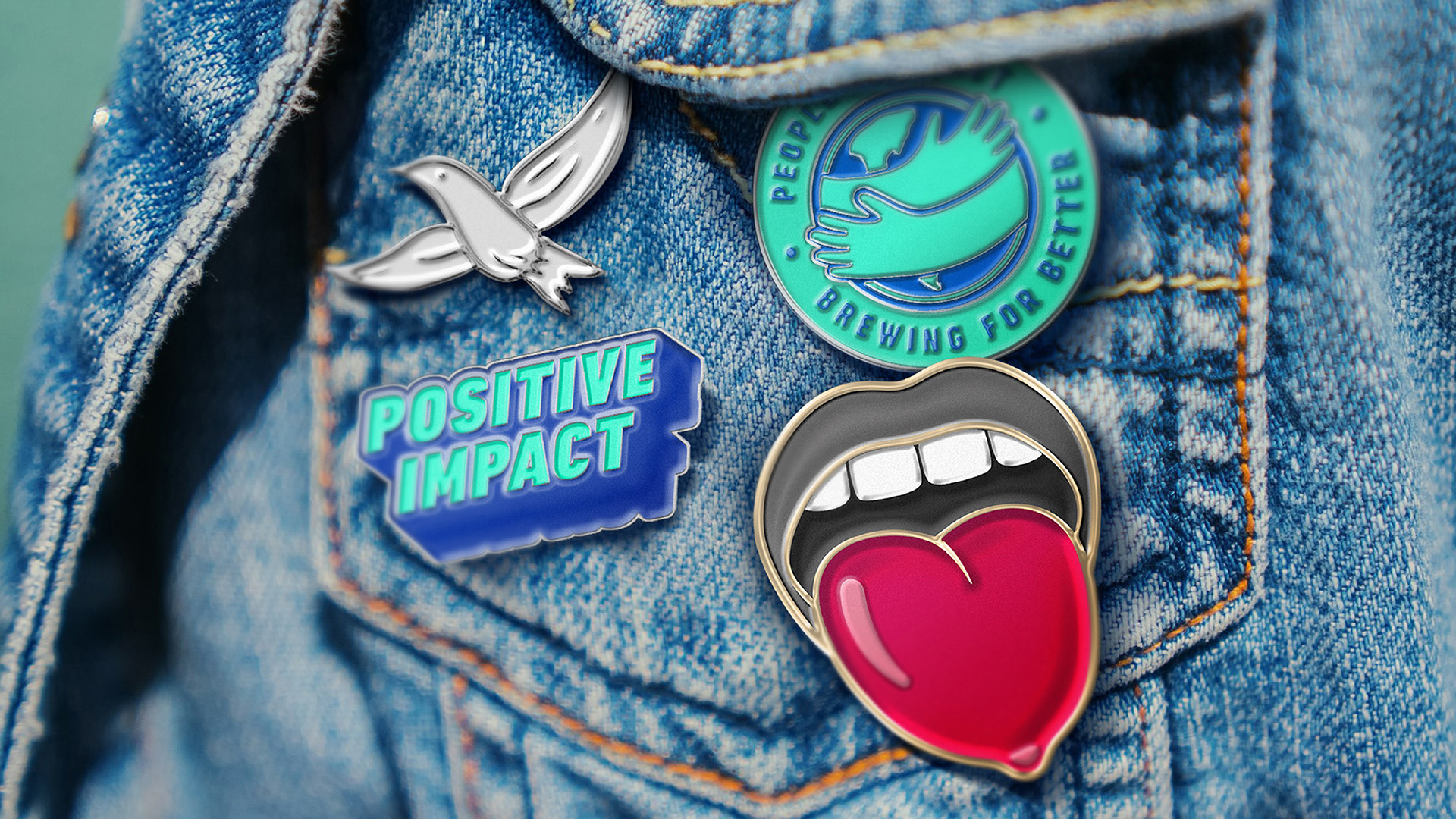
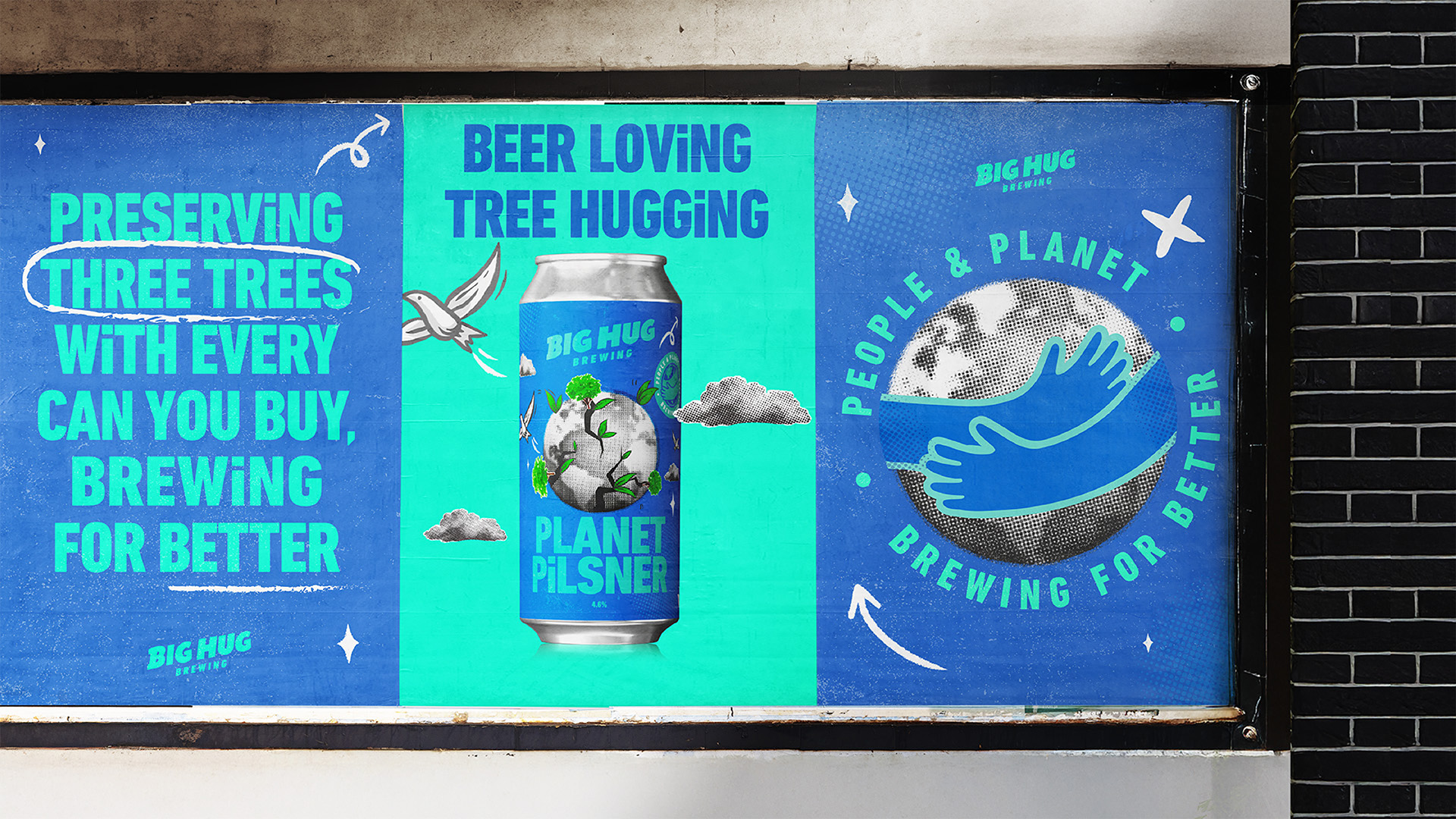
At the heart of the rebrand sits the World Hug logo, a bright, unifying symbol of connection and optimism. Acting as both a visual anchor and a trustmark for social good, it brings cohesion to the range and provides an instant signal of Big Hug’s total-impact mission, whether seen on a can, a tap badge, or a festival banner.
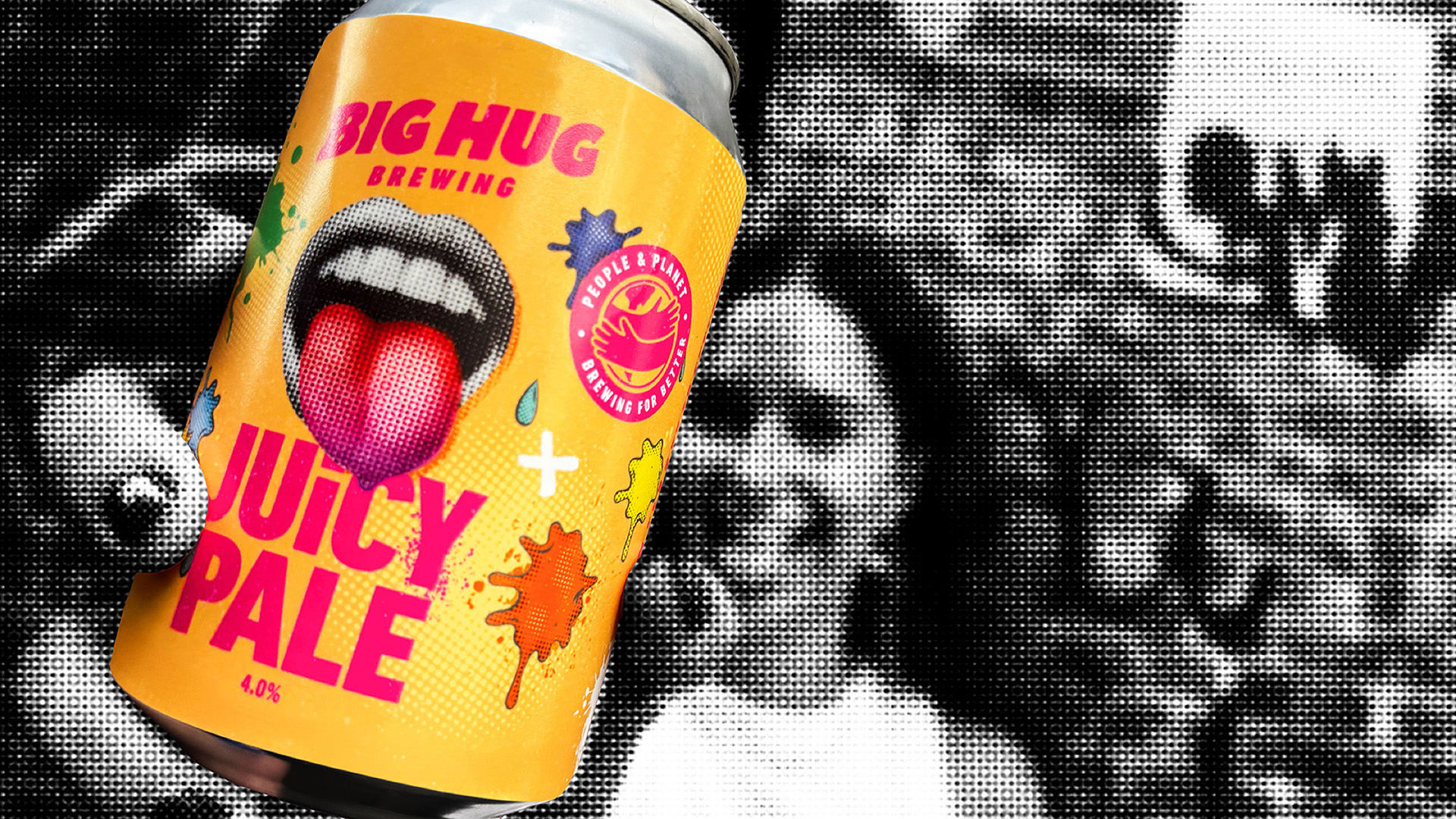
Around this central mark, JDO built a vibrant, collage-inspired brand world. Bold colour, halftone illustration, and confident typography were applied across merchandise, point of sale, bar materials, digital assets, and large-scale festival environments. From T-shirts to tap handles, the identity was designed to turn fans into visible advocates for the brand’s mission.
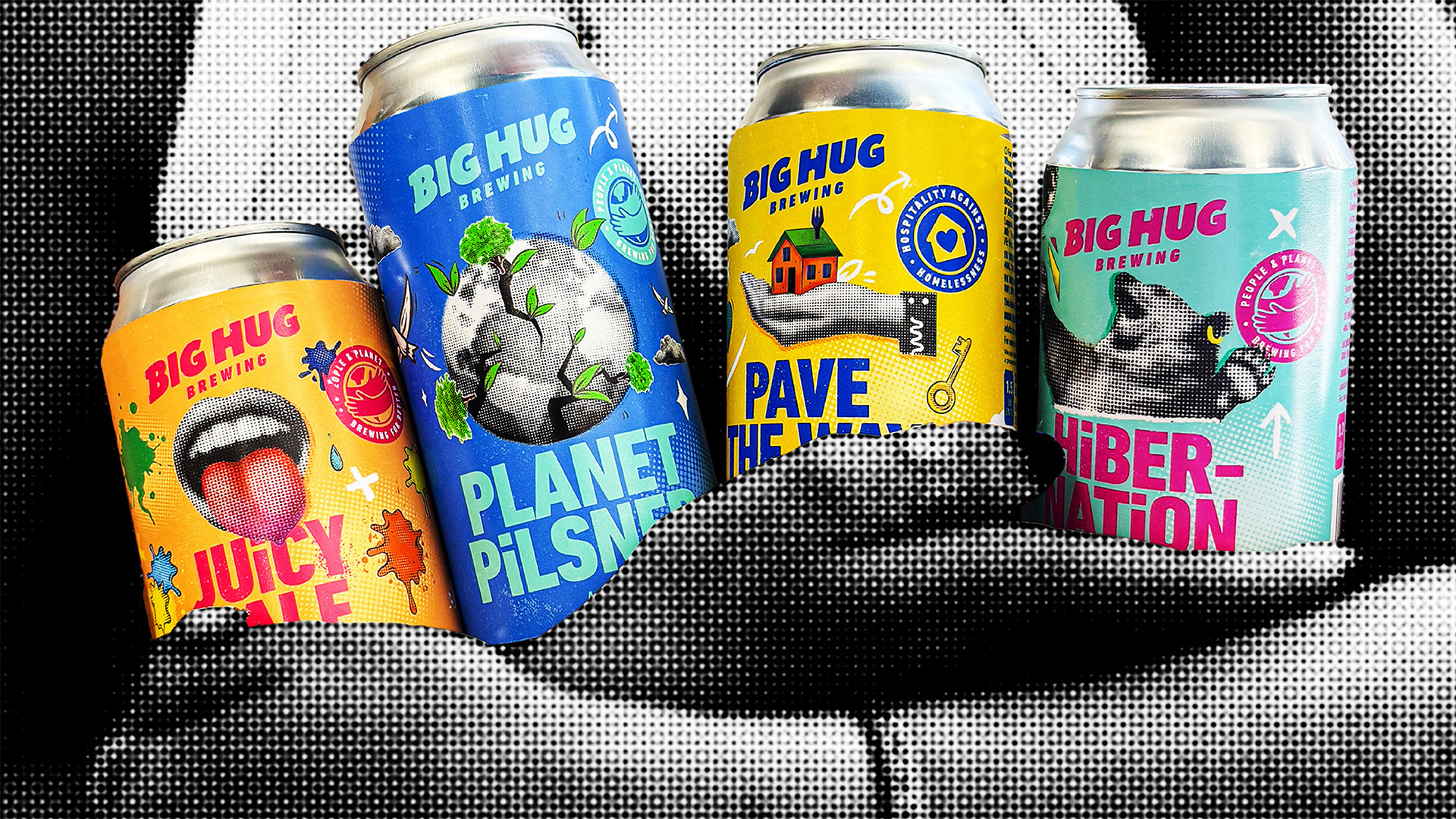
The packaging system was restructured to deliver clarity and impact on shelf while allowing each beer to retain its own personality. Storytelling was brought to the forefront, with each SKU clearly communicating the cause it supports. In this way, purpose becomes a tangible, on-pack experience, while the wider brand world ensures that Big Hug’s optimism, energy, and belief in better are felt consistently wherever the brand shows up.
Highlights
The most impressive aspect of the work lies in how purpose was transformed from a background narrative into a clear, visible, and commercially effective brand system. Rather than treating social impact as an add-on, the rebrand embeds Big Hug’s mission directly into its identity, packaging, and storytelling.
Central to this is the World Hug logo. More than a mark, it functions as a symbol of unity, optimism, and credibility. It acts as a trustmark for social good, allowing consumers to instantly recognise that every Big Hug beer contributes to a positive cause. This clarity creates belief and builds trust, both critical in a category where purpose-led claims are increasingly scrutinised.
Equally powerful is the packaging architecture. The previous fragmented range was unified under a consistent visual system that delivers standout on shelf while allowing each beer to retain its own personality. Colour, illustration, and typography work together to create impact at distance, while the on-pack storytelling brings depth and meaning up close. Each SKU clearly communicates the cause it supports, turning the act of choosing a beer into a moment of connection with Big Hug’s wider mission.
The system’s flexibility is another standout achievement. Designed to scale effortlessly, it performs across cans, tap badges, point of sale, digital platforms, festivals, and retail environments without losing coherence or energy. This balance of creative expression and disciplined structure allows Big Hug to feel handcrafted and human while operating as a serious, growth-ready business.
Market Performance
The rebrand delivered immediate and measurable commercial impact, validating the role of design in supporting Big Hug’s growth ambitions.
The new identity launched publicly at the London Craft Beer Festival 2025, a highly competitive environment where standout is essential. The brand achieved instant visibility and overwhelmingly positive feedback from consumers, trade partners, and industry peers. This early response translated quickly into commercial results.
Within the first month following launch, Big Hug secured six new trade listings, including placement within Fuller, Smith & Turner’s craft beer rotation and orders from Nectar Drinks UK. These listings represented a significant step forward, expanding Big Hug’s on-trade presence and reinforcing its credibility with influential partners.
Most notably, the rebrand supported Big Hug’s transition from a passionate challenger brand to a credible mainstream player. A major national listing with Asda was secured for March 2026, achieving one of the primary objectives of the brief. This marked Big Hug’s entry into large-scale retail, unlocking new audiences and long-term growth potential.
Beyond sales and listings, the rebrand has driven strong awareness and reputational value. The project has been widely featured across leading design and industry platforms including Dieline, Transform, Creative Boom, and World Brand Design. Big Hug has also received a Gold Muse Award and a shortlist position at the Brand Star Awards. These accolades have amplified visibility, strengthened trade confidence, and reinforced Big Hug’s position as a purpose-led brand with commercial credibility.
While still early in its mainstream retail journey, the rebrand has already proven its ability to drive tangible business results, demonstrating that clarity of purpose and strong design can directly support sales growth and market expansion.
Material(For concept works, please choose the material you plan to use)
其他 铝 Aluminium
Craft
The craft of the Big Hug rebrand lies in the balance between expressive creativity and disciplined execution. The visual identity brings together collage-inspired graphics, halftone illustration, and bold typography to create a world that feels handcrafted, energetic, and optimistic, while remaining clear and confident across every touchpoint.
Typography plays a central role in shaping the brand’s voice and presence. Confident, highly legible typefaces cut through busy environments and create instant recognition, working in harmony with illustration and colour to deliver impact without noise. The result is a visual language that feels playful yet purposeful, expressive yet controlled.
At the centre of the system sits the World Hug logo, crafted as a unifying symbol of connection and optimism. Acting as a visual anchor, it brings coherence to the range and extends seamlessly from packaging to tap badges, merchandise, digital platforms, and large-scale festival environments.
The wider brand world was designed to encourage creativity without chaos. Clear design principles ensure consistency while allowing flexibility and spontaneity, enabling the brand to show up with confidence across packaging, point of sale, merchandise, events, and digital experiences. The result is a cohesive, future-facing identity where craft supports clarity, storytelling, and creating belief.
Does the design solve the problems that are common across the product category? If so, please explain.
The design directly addresses two challenges that are increasingly common across the craft beer category and the wider brand landscape: extreme visual crowding and growing scepticism towards purpose-led brands.
Craft beer remains one of the most saturated retail environments, with shelves dominated by bold colour, illustration, and exaggerated personality. Big Hug faced the challenge of cutting through this visual clutter while still expressing character and warmth. The rebrand achieves this through focus and coherence. The World Hug symbol creates instant recognition and unity across the range, while confident colour, typography, and illustration deliver standout with clarity rather than chaos.
At a broader, cross-category level, the design also responds to the growing fatigue and scepticism surrounding purpose-driven brands. As more brands claim social or environmental intent, consumers have become wary of vague, performative messaging. For Big Hug, authenticity was essential. The design makes purpose visible, specific, and inseparable from the product itself. Each beer clearly communicates the cause it supports, turning purpose into a tangible, on-pack experience rather than an abstract claim.
What functional designs of the work have enhanced the user experience?
The Big Hug rebrand enhances the user experience by making the brand easy to recognise, easy to navigate, and easy to believe.
Previously, the brand appeared inconsistent and recessive. A fragmented range that made it difficult for consumers to quickly identify Big Hug or understand what it stood for. The new unified visual system now delivers clarity at speed with the World Hug symbol acts as a consistent visual anchor across the range, allowing consumers to identify the brand instantly, whether browsing a shelf, scanning a bar, or encountering Big Hug at an event. This replaces confusion with recognition and builds confidence at the first point of contact.
The packaging architecture has been restructured to support quick and intuitive decision-making. Where the range once lacked hierarchy, clear information design now guides the eye. Confident typography and distinct colour cues help consumers differentiate between SKUs while maintaining strong brand recognition, reducing friction at the moment of choice.
Beyond packaging, the wider brand world brings consistency where there was once disconnect. Across merchandise, festival environments, and digital platforms, the design system creates a seamless, familiar experience that reassures consumers and reinforces trust wherever the brand shows up.
Did the design help increase the sales performance of the product? If so, please give related evidence.
While full sales data is not yet available, the design has already played a clear role in directly supporting brand growth and market expansion.
Before the rebrand, Big Hug’s fragmented identity limited its ability to secure wider distribution and compete confidently in a crowded category. The new unified brand world has strengthened clarity, recognition, and credibility, making the brand easier for trade partners to understand, trust, and list. Since launch, Big Hug has expanded its presence across both on-trade and off-trade channels, securing multiple new listings within weeks of release.Most significantly, the rebrand supported Big Hug’s progression from an independent challenger to a credible, retail-ready brand, culminating in a major national supermarket listing.
While precise sales figures are still emerging, increased listings, wider distribution, and stronger trade confidence are widely recognised indicators of positive brand performance.
Does the work consider sustainability (environmentally or commercially, or both)? If so, please explain.
The work considers sustainability primarily through a commercial and purpose-led lens, helping Big Hug articulate and deliver on its promise of “Brewing For Better, for people and planet.”
While the rebrand itself did not introduce new environmental materials or manufacturing processes, it strengthens sustainability by making the brand’s positive impact clear, visible, and accountable. Big Hug’s use of aluminium cans, one of the most widely recyclable packaging materials, supports its environmental intent, but the design’s primary role is to communicate how the business contributes to people and planet through its profit-sharing model.
The rebrand brings clarity to this commitment by embedding purpose directly into the brand system. Each beer clearly communicates the cause it supports, turning sustainability from a vague claim into a transparent, product-level action. This approach avoids generic messaging and instead builds trust through specificity and consistency.
Commercially, the design supports sustainability by creating a scalable, coherent brand world that enables long-term growth. By strengthening recognition, credibility, and trade confidence, the rebrand helps ensure Big Hug’s positive-impact model is viable and sustainable over time.