

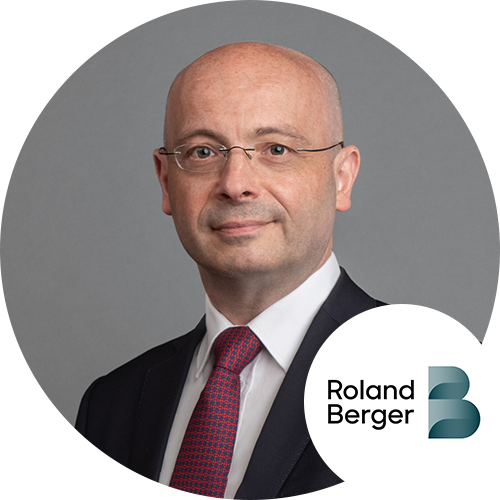
Julien has over 25 years of experience in management consulting, with a focus on consumer goods and retail industries. He is now a Senior Partner with Roland Berger and leads the firm’s Asian Consumer & Retail practice.
Prior to joining Roland Berger, Julien held several leadership roles in the management consulting industry in Asia. Over his consulting career, he has delivered projects across Europe and Asia, gradually concentrating on fast-growing consumer markets.
From 2006 to 2009, he worked as a principal consultant in Mumbai to one of the world’s fastest and most ambitious retail rollouts in the world, bringing to life a retail network to over 1,300 stores in just 18 months — all from scratch. Over the last 10 years, he has worked closely with global sports brands, luxury, and cosmetics brands in the design of their growth strategies in the Chinese eCommerce market, and has advised leading Asia retailers in the redesign of their growth strategies, store formats, and operating models.
Julien holds master’s degrees from the École Centrale de Lyon and Essec Business School in Paris, and attended the Advanced Management Program at Harvard Business School.
As different retail channels come to play distinct roles in consumers’ minds—some representing value for money, others curated quality, and still others speed and instant fulfillment—the core question for brands has shifted accordingly. The challenge is no longer “where to sell,” but how a brand is understood and remembered within each channel.
Within this discussion, we will explore how brands can rebuild their product portfolios and channel strategies based on their positioning in consumer mindsets: which products should serve as vehicles for brand meaning, and which are designed to drive scale and efficiency; how supply-chain flexibility can support the differing rhythms and requirements of each channel; and how deeper forms of brand–retailer co-creation can establish clear and enduring divisions of cognitive roles.
In a highly diversified channel landscape, brands with true growth potential no longer attempt to cover every channel with a single, undifferentiated product. Instead, they learn to express a consistent brand identity through differentiated, intelligible product offerings, tailored to the specific logic of each channel.