



Food science is evolving from lab discovery to large-scale impact. As consumers seek evidence-based and personalized health solutions, the challenge is to make science both accessible and actionable.
Danone is meeting this challenge through initiatives such as OneBiome, precision fermentation partnerships, digital nutrition platforms, and sustainability-driven R&D. By scaling microbiome and nutritional science globally, Danone is redefining what it means to connect science, health, and everyday life.

In closely following the development of Yoplait China, we have come to see a highly representative growth journey—from a period of pressure, to a return to profitability, and now to a new phase marked by capital transition and brand evolution. This is not only a financial achievement, but also a reflection of strategic judgment and organizational resilience.
In today’s intensely competitive dairy market, where growth logic is being redefined, such experience is particularly valuable for the industry.

From human milk oligosaccharides (HMOs) to functional probiotics, from novel cheese structure design to AI-driven formulation development, Yili Innovation Center Europe has spent the past decade advancing its vision of “driving industry through science, serving health through technology.” The center has achieved a series of influential breakthroughs across multiple frontiers of nutrition and technology. This journey is not only a real-world exploration of integrating scientific research with dairy innovation, but also a valuable model of cross-border R&D collaboration for dairy companies in China and around the world—demonstrating how science, industry, and consumers can form a positive cycle to build an innovation ecosystem for the future.

Chilled dairy has become one of the most dynamic arenas for product innovation. Consumers now seek not only core nutrition but also functional alignment with active lifestyles and delightful consumption experiences across various moments.
This session explores how to build the next generation of chilled dairy innovation through the synergy of:
-Nutrition enhancement as category foundation
-Functional differentiation to unlock new growth territories
-Experience-driven scenarios from daily nourishment to better-for-you indulgence
-A structured innovation model that sustains category momentum
A practical deep dive into how brands can lead future growth by optimizing across nutrition × function × experience.

8M, 100M, 230M, 500M, to 1B (RMB). At a time when the dairy industry is navigating structural shifts and cooling growth, Öarmilk has delivered a powerful track record, achieving a 100-fold growth trajectory over the past five years.

In the chilled milk category, “taste” is becoming increasingly important. Meiji Co., Ltd. has brought one of its star milk products from Japan to China under the name “Zhen Hao He Milk”. “Zhen Hao He” is a phonetic play on the Chinese phrase “Zhen Hao He (真好喝)”, which literally means “really delicious” or “truly tasty.” This product not only uses patented technology to remove the typical milky odor, but it has also been the top-selling milk product in the Japanese market for more than 20 years.

While many brands rely on trendy flavors to attract younger consumers, Jiufeng has taken a more restrained approach—building a refined everyday dairy experience through thoughtful ingredient selection, balanced flavor, and strong visual expression. Even at a price point of RMB 8.8 per bottle, its matcha milk sold 500,000 bottles within three months, showing that when product quality and aesthetic appeal are both delivered, consumers are willing to pay for it.

Flavor innovation in yogurt is moving beyond “sweet and fruity” toward bolder and more cross-category experiments. Beyond the craze for local fruits such as guava and passion fruit, vegetable-flavored yogurts are quietly emerging—kale, beetroot, and even bitter melon are becoming new favorites on the ingredient list. This not only challenges consumers’ palates but also helps yogurt transcend its role as a “snack,” bridging into the realms of “light meals” and “functional dining.”


As advancements in medical science intersect with evolving consumer expectations, the dairy industry is entering a new phase of growth. Innova Market Insights will explore how the post-GLP-1 era is reshaping eating behaviors and health priorities. This session will highlight key innovation trends in dairy and translate them into real-life consumer moments—uncovering specific needs and product opportunities. The aim is to help brands move from high-level trend insights to actionable innovation directions, enabling more precise positioning in an increasingly complex consumption landscape.



The global GLP-1 market is projected to surpass $150 billion by 2035, yet 40% of users suffer from side effects such as nausea and muscle loss. This "unhealthy weight loss" pain point presents a major strategic opportunity for the dairy industry, leveraging its natural advantages in high-quality proteins and prebiotics. FrieslandCampina Ingredients will explore how a “Triple Engine”—comprising Premium Protein Blends, Gut Comfort, and Satiety Boost—can mitigate side effects, positioning dairy Ingredients as the essential “Nutritional New Infrastructure” for hundreds of millions of weight-loss consumers worldwide.

GLP-1 drugs are sweeping the globe, reshaping the weight management landscape.
Yet as questions around efficacy, side effects, cost, and accessibility emerge, growing attention is shifting to the “post-GLP-1 era.” Diverse approaches—ranging from nutritional interventions and functional foods to metabolic health formulations—are entering the field.
What structural changes has the GLP-1 boom already triggered? And as the market normalizes or cools, where will the next wave of innovation and business opportunities in weight management arise? Where are the advantages and opportunities for enterprises?



As food technology continues to evolve at unprecedented speed, even the most established categories — including ice cream — are being redefined by new innovation paradigms. From novel ingredients and processing technologies to digital tools and artificial intelligence, R&D is entering a new era of precision, speed, and complexity.
In this session, we will explore how global ice cream leader 『Magnum』 is reimagining innovation through the lens of technology and AI. The discussion will examine which emerging technologies truly unlock scalable value, how AI can accelerate consumer insight generation and flavor development, and where human creativity, sensory judgment, and strategic decision-making remain irreplaceable. The session will also address how large organizations balance bold innovation with commercial viability, transforming ice cream R&D from inspiration-led development into a disciplined, future-ready system.

Against the backdrop of fierce competition between ice cream and freshly made dairy brands in China, and rapidly shifting consumer preferences, DQ has continued to deliver stable and resilient growth. In 2025, with a network of more than 1,800 stores, DQ launched over 150 new products. These new offerings accounted for more than 60% of total annual sales, while average sales per store increased by over 11% year on year.
Behind this performance is not a reliance on a single blockbuster product or short-term marketing campaigns, but a highly focused, well-paced, and long-term-oriented product strategy.

In the highly competitive and seasonal ice cream market, Pobeice has carved out a distinctive growth path. Since its founding in 2020, the brand has quickly expanded from a regional player to a national presence across over 150 cities and 1,150+ stores. Leveraging a combination of “freshly made products + hit items + visually appealing designs,” it has stood out among young consumers.
Amidst a market characterized by price wars, innovation races, and visual competition, how has Pobeice managed to break through and differentiate itself in the freshly made ice cream segment?


AI is reinventing every beverage link—concept, flavor, production, channel, consumer. PepsiCo rolls out Salesforce Agentforce, embedding autonomous AI agents. ChaPanda's "AI + DevOps" model uses LLMs to lift R&D efficiency by 24%. Live cases fuel a practical Beverage AI Transformation White Paper that merges trends with step-by-step guidance.
In 2025, how did NOWWA Coffee leverage the "Store-in-Store" model to reach the 10,000-store milestone? How did they manage to open an average of 1,000 new stores per month without being crushed by price wars—and instead, see their cup volume triple?

Many beverage brands hit a growth ceiling not because of a bad product, but because they try to force "Tier-1 demands" onto lower-tier markets. The reality is that the same drink, once it enters a new market, becomes a completely different business model.

By leveraging "slow-brewing and low-sugar" formulations alongside innovations in packaging and distribution, "LOLO Herb" saw its new product sales hit 500,000 bottles on the first day. This legacy brand is successfully stepping outside its "Almond Dew" comfort zone to find new growth engines.

In a hyper-competitive global food and beverage market where traditional R&D efficiency is under pressure, how does PepsiCo R&D utilize external innovation to shatter category ceilings?
Peet's Coffee is the industry's steady “marathon runner.” With its “21-day freshness” rule for hand-poured beans and a lean, curated menu, Peet's has charted a unique growth path by mastering the art of “doing less.”

Herbal tea has long been strongly associated with the function of “preventing heatiness,” but Wonlucky has come up with a new approach—breaking down its signature “heatiness prevention” claim and embedding it into new consumption scenarios such as snacks and hotpot. Through sugar reduction, concentration, and cross-category formulation, it achieves deep integration with snacks and even hotpot seasonings.

For years, adding vegetable oil has been the industry’s “open secret” to mimicking the silkiness of dairy. However, FreeNow believes that true health shouldn’t require such a compromise. Its new Rye Milk isn’t positioned as a mere substitute, but as a celebration of the grain itself.
By leveraging its proprietary enzymatic hydrolysis technology, FreeNow has completely stripped away the added oils typically used for mouthfeel, preserving only the natural, robust aroma of rye. “No Added Oil in Rye, Full Fuel for Life”—this is more than just a slogan; it represents FreeNow’s “clean sweep” of traditional healthy formulas.


In 2023, HPP cold-pressed juice brands like VCLEANSE saw annual sales surpass 500 million RMB. The explosive popularity of HPP has sparked a more imaginative proposition: its potential extends far beyond fruit and vegetable juices. How can brands leverage this breakthrough advantage to empower beverage expressions that prioritize both "efficacy and flavor"?

With ice cup sales surging by 300% for two years straight, brands like Freshippo, Nongfu Spring, and Lawson are all ‘diving into the ice water.’ What exactly is the secret behind why these ice cups melt so slowly?

Long confined to "health symbols" and "holiday ingredients," cranberries were once a classic niche raw material. Ocean Spray broke this barrier by deep-diving into the science of Proanthocyanidins (PACs) and perfecting flavor compounding to strip away the "tart" and "function-specific" labels. No longer just a functional ingredient, it has transitioned from a specialized supplement to an everyday beverage by delivering a refreshing taste that fits any occasion.
As High-Pressure Processing (HPP) has been widely adopted in premium juice and beverage production, questions around processing time, energy consumption, line integration, and scalability have become increasingly relevant. Against this background, PEF has emerged as an alternative processing pathway with distinct engineering characteristics.
Pulsed Electric Field (PEF) processing applies short, high-voltage electric pulses to liquid products, disrupting microbial cell membranes through electroporation within microseconds and enabling fast, low-heat, continuous processing. With more than 270 industrial PEF systems installed globally, Elea has advanced PEF into a mature, energy-efficient technology for continuous beverage and juice processing.
This session introduces the scientific and engineering principles behind PEF and explains how they translate into real-world operation on modern beverage lines. Drawing on Elea’s commercial experience, industrial case examples from juices and functional beverages will highlight key process-engineering considerations to illustrate where each technology fits best in premium beverage production.

With 81% of its stores in Tier-2 cities and below—and notably avoiding Beijing and Shanghai—Guming has opened 13,000 locations! How does GOODME provide stable quality and affordable milk tea for lower-tier markets? And how did they successfully scale the local Tong Sui (dessert soup) flavors of Guangdong and Guangxi to the rest of the country?

Across the global beverage industry, innovation is shifting from single-point breakthroughs to parallel validation of product concepts. Diverse consumer needs, processing technologies, and flavor systems are creating new growth opportunities—while placing higher demands on R&D and application design.
The FBIF2026 Concept Product Launch does not define a single challenge. Instead, it highlights four high-relevance innovation pathways, giving shortlisted participants the flexibility to choose the direction best aligned with their strengths and to present commercially applicable product concepts that respond to real market needs.
Four Innovation Pathways
1 | Sports Nutrition
As the sports nutrition market continues to expand, innovation is moving beyond powders and shakes toward RTD, daily-use, and low-burden beverages. This pathway focuses on proteins, amino acids, electrolytes, and functional blends, with emphasis on taste, stability, and usage scenarios.
2 | HPP & Cold-Pressed Technology
With growing demand for minimally processed products, HPP technology is gaining traction across juices, functional beverages, and premium RTDs. This pathway explores flavor retention, formulation stability, and differentiated expression under HPP processing.
3 | Coffee Ingredient & Application Innovation
Coffee is evolving into a broader ingredient system spanning flavor, functionality, and everyday occasions. This pathway highlights innovative uses of coffee ingredients in RTD, functional, low-burden, and cross-category applications.
4 | Flavor & Sensory Innovation
Flavor has become a key driver of emotional connection and consumption context. This pathway encourages distinctive flavors, regional profiles, and multi-sensory designs, exploring how flavor can define product identity and competitiveness.







"Health" is one of the most complex — and often misunderstood — themes in snack innovation. For some, it means clean labels and simple ingredients; for others, nutritional benefits or weight management; and for many, a sense of guilt-free enjoyment. Starting from consumer insight, this session unpacks what "healthy snacks" truly mean to different groups, and explores how brands can translate that value through ingredients, processing, and packaging design.

Many confectionery brands succeed with one iconic product. Storck took a different path — building strong brands across multiple categories, from boxed chocolates and wafers to candies and jellies. The key lies in clear brand positioning. Each Storck brand plays a distinct role in consumers' lives. merci, for example, turns chocolate into a simple yet meaningful way to say "thank you," while Knoppers positions itself as a satisfying energy boost for busy mornings.
With these clearly defined brand roles, supported by high-quality production and technology from Germany, Storck has built confectionery brands that resonate with consumers in more than 100 countries. This session will explore how Storck creates lasting brand relevance across categories, markets, and generations.

Quality trust is becoming the core driver of high-quality growth in the healthy snack sector. The industry now faces three key challenges: substantiating health claims with science, building end-to-end compliance systems, and creating differentiated product competitiveness. Building a systematic trust framework, based on scientific transparency, standardized testing, visible processes, and traceable quality, is the path to long-term brand growth. It enables brands to move from self-claims to third-party endorsement and secure lasting growth in the healthy snack market.

Based on Mordor Intelligence projections, the AI market in the food and beverage sector is expected to reach USD 29.94 billion by 2026, with a compound annual growth rate (CAGR) exceeding 45.8%. With AI, sensory analysis is no longer limited to subjective evaluation. It can accelerate product development, shorten innovation cycles, and improve the accuracy of predicting consumer acceptance. From E-Nose and E-Tongue to deep learning, and neurophysiological technologies, this session explores the latest AI-driven sensory analysis tools.


AI is not just transforming data—it’s redefining how we understand the human body. What once seemed impossible in precision nutrition—decoding the complex interplay of genes, biomarkers, and metabolism—is now within reach.
Pioneers like Viome Life Sciences (AI + RNA, $175M funded) are proving the power of intelligent nutrition, using RNA sequencing to detect early health risks and deliver personalized dietary solutions that have clinically reduced IBS symptoms by 58% and anxiety by 31%.
In this new era, AI becomes more than a tool—it’s the nutritionist’s “cyber colleague,” bridging science and human vitality in ways never before imagined.
In the era of precision nutrition, traditional folic acid faces significant hurdles due to metabolic conversion limitations. Approximately 50% of the population carries genetic polymorphisms that create a "conversion gap," often rendering conventional supplements ineffective. Gnosis by Lesaffre will provide an in-depth analysis of Quatrefolic®, the 4th-generation active folate. By bypassing the need for conversion to ensure direct absorption, Quatrefolic® is ushering in a new "express" era of nutrition. Leveraging global innovation cases and pioneering research, we will explore how active folate empowers brands to expand beyond the maternal-infant niche and seize growth opportunities across the entire life cycle, including cardiovascular and cognitive health.

“Let food be thy medicine,” the timeless principle of Hippocrates, the father of Western medicine, has shaped Europe’s approach to daily self-care for centuries. Elderberry anthocyanins, a flagship ingredient within this food-as-medicine tradition, have long been used to support the body through seasonal changes and everyday health maintenance.
In November 2025, elderberry anthocyanins were officially approved as a new food ingredient in China, marking the beginning of their legitimate application in the domestic functional food market and opening new opportunities for immune health and cross-category innovation. In the European and U.S. markets, elderberry has already established itself as a top-selling immune-support ingredient, backed by scientific research and consumer recognition. Its polyphenols also modulate gut microbiota, offering “non-traditional prebiotic” potential, extending its benefits from seasonal immune support to daily health management.

Tonic and food-as-medicine products have long been seen as high-barrier, low-frequency offerings for a niche group of informed consumers. Leveraging Hema’s retail ecosystem, supply chain capabilities, and data-driven insights, 「Hebubu」 applies modern FMCG logic to reframe traditional tonics into everyday, easy-to-use functional foods. This shift is helping move the category from an elite niche into everyday life—and redefining how tonic and functional foods can scale for the mass market.

Focusing on high-potential consumer groups such as young mothers, the “new silver generation,” and pet-owning households, this panel will examine real-life usage scenarios and the decision logic behind everyday consumption, and explore how products based on food-medicine ingredients can be better positioned and communicated. Bringing together academic researchers and industry practitioners, the discussion will also address how traditional Chinese medicine principles, modern food technology, and product development can work together in practice, while bridging gaps between R&D, distribution channels, and data feedback.




As probiotics enter a red ocean phase, both product offerings and market entrants are rapidly increasing, while channel structures are being reshaped by e-commerce and instant retail. In this context, Yakult, as a classic probiotic drink, faces not only pressure on sales growth, but also broader industry challenges around redefining brand value and exploring new channels.

Cellular health is the cornerstone of longevity science, and mitochondrial decline—as the cell's energy hub—is one of the core hallmarks of aging. As nutritional intervention enters the molecular era, bypassing biological barriers to achieve precision intervention for specific organelles has become the key to extending healthspan.
What are the core mechanisms of mitochondrial targeting technology? How can scientific innovation be transformed into tangible consumer value? These are the essential questions that brands and products must answer in this new era of cellular health.

Japan’s Foods with Function Claims (FFC) system is reshaping the R&D and market logic of the health food industry, placing rigorous scientific evidence at the core of product value. Kirin’s IMMUSE™ LC-Plasma became the first product in Japan to receive official recognition for its function in “Immune Care.” Backed by solid scientific research, IMMUSE™ has successfully charted a path from the laboratory to a market-defining hit.

As sports nutrition evolves from simple “supplementation” to science-driven performance intervention, MYACTION is pioneering a systematic R&D approach that fills a critical gap in China’s professional sports nutrition market. Grounded in energy-metabolism mechanisms, diverse training scenarios, and empirical data from professional athletes, MYACTION has built a comprehensive development framework covering ingredient selection, efficacy validation, scenario-based product design, and performance evaluation.
This session will explore how MYACTION transforms scientific research into practical solutions that enhance athletic performance, accelerate recovery, and optimize energy utilization. It will also examine future innovation pathways for China’s sports nutrition landscape.

Creatine’s global rise illustrates how a niche functional ingredient can break out: originally focused on fitness and sports nutrition, it gained mass awareness through viral social media, especially TikTok, boosting category sales and brand penetration.
According to SPINS data for the 52 weeks ending December 29, 2024, total creatine supplement sales in the US reached $378 million, representing a 22% CAGR from 2023–2024, with gummies being the standout growing at 360% YOY $ growth.
Positioned as "High-Performance Nutrition Pro+," BYHEALTH is dedicated to making "Nutrition Quantifiable, Results Perceptible." The brand has not only turned its liver support pills—featuring a "1-to-20" potency ratio—into a workplace essential with over 1 billion sold, but has also expanded its "high-performance toolkit" with 98.9% purity fish oil and 3-second fast-dissolving sleep tabs. This session reveals how BYHEALTH translates hardcore R&D into straightforward selling points to precisely penetrate the high-pressure demographic aged 25-40.


With fragmented information and complex behavior, capturing true brand insights is harder than ever. Surveys often say “health first,” yet real choices show “price and taste first,” leading to misjudgments.
In the face of a reality where data is accurate, behaviors are fragmented, and motivations remain hidden, how can brands reconstruct their insight framework? By integrating results, behaviors, and psychology, how can brands identify false needs and uncover underlying motivations, reconnect with human nature, and ultimately strengthen decision-making capability and ROI?

KitKat, originally a British chocolate brand, has sustained strong sales for over 45 years while developing a unique path in Japan. Through the phonetic link between its name and “good luck” (Kitto Katsu), it has become a symbol of encouragement during exam seasons. This has extended into mail-able gift packs, regional editions, and seasonal launches, with over 400 flavors to date—evolving into a collectible and a cultural icon embedded in everyday rituals.
This also highlights a key insight: data can tell us what consumers watch and buy, but not why a brand gains emotional and cultural meaning. In a category shaped by emotion and culture, consumers are not just buying products, but a lifestyle and a sense of identity.
So the questions are:
• How can brands go beyond data to identify and amplify cultural resonance?
• How can cultural narratives be translated into product experience and content?
• How can brands avoid common pitfalls and build lasting cultural relevance?
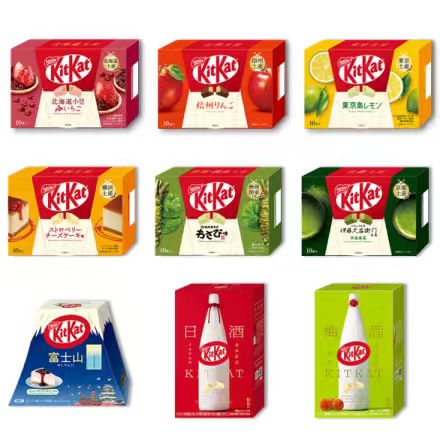
(Source: KitKat Japan)

In bilibili’s 2025 “Top Products” list released earlier this year, food & beverage consumption is clearly becoming more emotion-driven. Around 40% of the featured products are IP collaborations, showing that younger consumers are no longer just paying for taste, but for emotions, passions, and a sense of belonging.
At the same time, while AI is boosting content production efficiency, it also risks creating homogenized, “machine-made” content. In an era where attention is lost in seconds, how can brands truly capture young audiences and build deeper emotional connections? Short-term sensory appeal may drive traffic, but high-quality content remains the most authentic and lasting way to engage.

As "consumer insights" are repeatedly mentioned and gradually become a safe but hollow buzzword, marketers may need a more honest conversation that does not shy away from real-world friction:
When insights enter the decision room, are they truly the starting point of decisions, or merely used afterward to justify outcomes?
When insights conflict with growth targets, resource constraints, or personal judgment, how do brands actually make trade-offs?
And which insights, seemingly right in direction, fail to be executed due to timing, organizational, or cost constraints?
This panel brings together consultants and leading brands to discuss both methodology and frontline practice. Focusing on how insights are generated, evaluated, prioritized, and executed, the session will explore a critical question: in an increasingly uncertain business environment, how can consumer insights genuinely support key decisions and be translated into sustainable growth capabilities?

In the era of short video and social media, content is the main battlefield for brand growth. Yet many still follow the old “produce, post, wait” logic, resulting in short-lived, low-efficiency work. An effective system should be productized—modular, multi-platform, and reusable.
Coca-Cola’s Share a Coke created a global template; McDonald’s built modular “Hash Brown at Breakfast” assets; Saturnbird unified its story under “Sustainable Coffee Living”; Eastroc activated modules like “hard work” and “late-night hustle.” Each turned content into repeatable growth assets—extending lifecycle, broadening reach, maximizing ROI.
In a culture chasing virality, how can brands build a sustainable content system that transforms one idea into a long-term, reusable asset?

As more Asian companies pursue international expansion, many face a common challenge: strong success at home does not automatically translate into success abroad. Building brands and businesses across markets requires more than exporting products or scaling distribution. It requires the right operating model, capabilities, talent, cultural understanding, and brand-building system to support sustainable growth. This session explores the organizational and marketing realities behind global expansion and offers a practical perspective on what it takes to build the foundations for long-term international success.

* Includes a tasting session where we reimagine the format of convenience food.
In a fast-moving creative landscape, brands are often caught in a cycle where attention peaks quickly and disappears just as fast. Yet brands that truly commit to long term personality building are rarely those making bigger marketing moves. Instead, they focus on turning small, but punchy creative ideas into lasting assets — ideas that become memories, transcending the familiarity of everyday life so relationships between people and brands flourish long term.
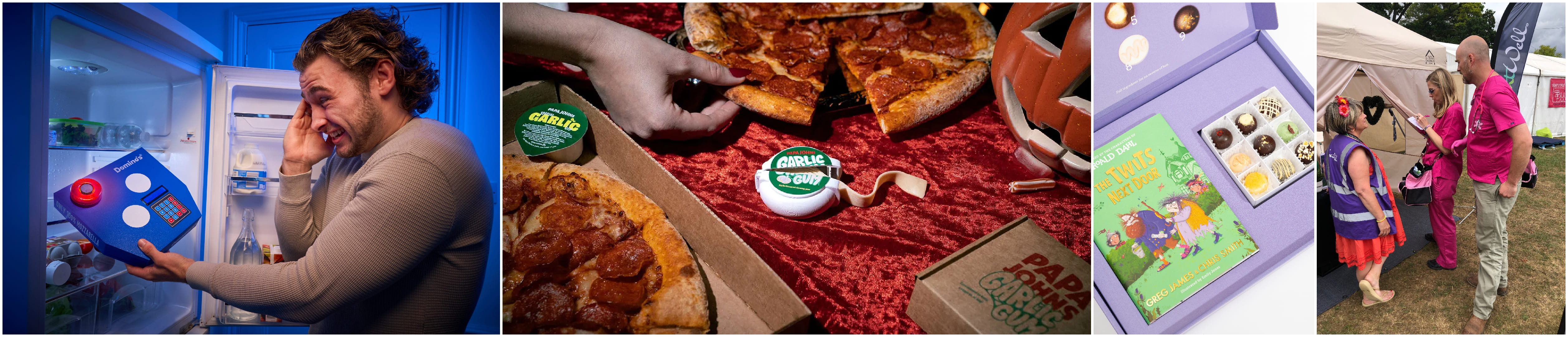
- At a music festival, we Unusual Service reframed marshmallows as “emotional remedies”. Through role play, culinary doctors delivered playful diagnoses and prescribed marshmallow treatments such as heartbreak menders or scurvy busters, replacing transaction with care and building emotional connection.
- To mark the launch of a new book, one brand translated mischievous storytelling into a multi-sensory chocolate experience, turning narrative twists into unpredictable flavour moments and words into mouthfeel, allowing the story to move off the page and into the body.
- Addressing a real frustration for their target audience in shared living environments, Domino’s transformed disposable pizza packaging into a reusable security device, shifting the brand from a one-off consumption moment to a lasting presence in the home.
- To celebrate both a historical and cultural holiday a pizza brand wanted to transform a savoury cult classic into a portable brand artefact that travelled beyond the meal occasion, keeping the flavour “on the lips” in both a literal and cultural sense. Come and try it for yourself. Also you’ll have the chance to blind taste test some familiar flavour in an unfamiliar form. Curiosity required.
In this interactive session, the UK-based Unusual Service team will share their long term perspective, offering brands inspiration for fun, concrete creative actions that do not just generate attention, but stay, are used, and become part of everyday life.




The Chinese market is entering a new and unfamiliar era: slower growth, intensified competition, and a shift toward zero-sum dynamics. Traditional innovation formulas are rapidly losing their effectiveness. While new product launches continue to increase, fewer are delivering meaningful growth. The food and beverage industry in China is now confronting the reality of “innovation inefficiency” alongside rising “innovation anxiety.”
With traffic reaching its ceiling and homogenization accelerating, blockbuster products may seem like a shortcut, yet often lead brands into deeper competition and uncertainty. The question is no longer whether to innovate, but how to innovate effectively.
This session will unpack how functional, emotional, and social values are being redefined, and introduce three high-impact innovation strategies for the “age of intense competition,” helping brands navigate uncertainty and unlock more sustainable growth.

As a traditional meat brand, Shuanghui has recently stood out in marketing. In Meituan Instashopping’s latest scenario-based brand ranking, Shuanghui placed in the top 10 across multiple occasions—from breakfast and afternoon tea to workplace meals, local leisure, and travel—and even outperformed snack brands like Lay’s and Want Want in the “late-night cravings” scenario.
From selling products to owning occasions, and from functional consumption to emotional connection, Shuanghui is redefining its growth logic.
• How can a meat brand enter occasions like afternoon tea?
• How did it outperform snack brands in late-night consumption?
• How can traditional brands leverage occasions and emotion to unlock new growth?



Data is everywhere, yet turning it into real business value remains difficult. Despite heavy investment in data infrastructure, many organizations still struggle to activate data and translate insights into action—especially in the food and beverage industry, where unstructured data dominates and customer journeys are highly fragmented.
In this session, the Global Head of Digital Commerce Marketing at Mondelez will share how the company uses its dCommerce practices to embed data and analytics into everyday business operations. Through examples of precision marketing, continuous optimization, and strategic big bets, the session will explore how data is structured and activated, how it supports decision-making and optimization loops, and how these capabilities ultimately drive sustainable digital growth.

As AI becomes widely applied in creative production, efficiency is surging and the “industrialization” of creativity is accelerating. At the same time, a series of deeper questions are beginning to emerge:
- When AI can generate content at scale, will originality be diluted?
- As consumers become aware of AI’s role in ad creation, will trust be affected?
- When “AI-powered” itself becomes a marketing hook, how can brands avoid it being just a superficial concept?
- As large volumes of low-quality content flood the market, how can brands uphold their aesthetic standards and core values?
This session will focus on how brands, in the age of AIGC, can create content that captures attention, drives sharing, and delivers real results. Drawing on practical methods and real-world experience, it will explore more actionable and effective creative approaches.

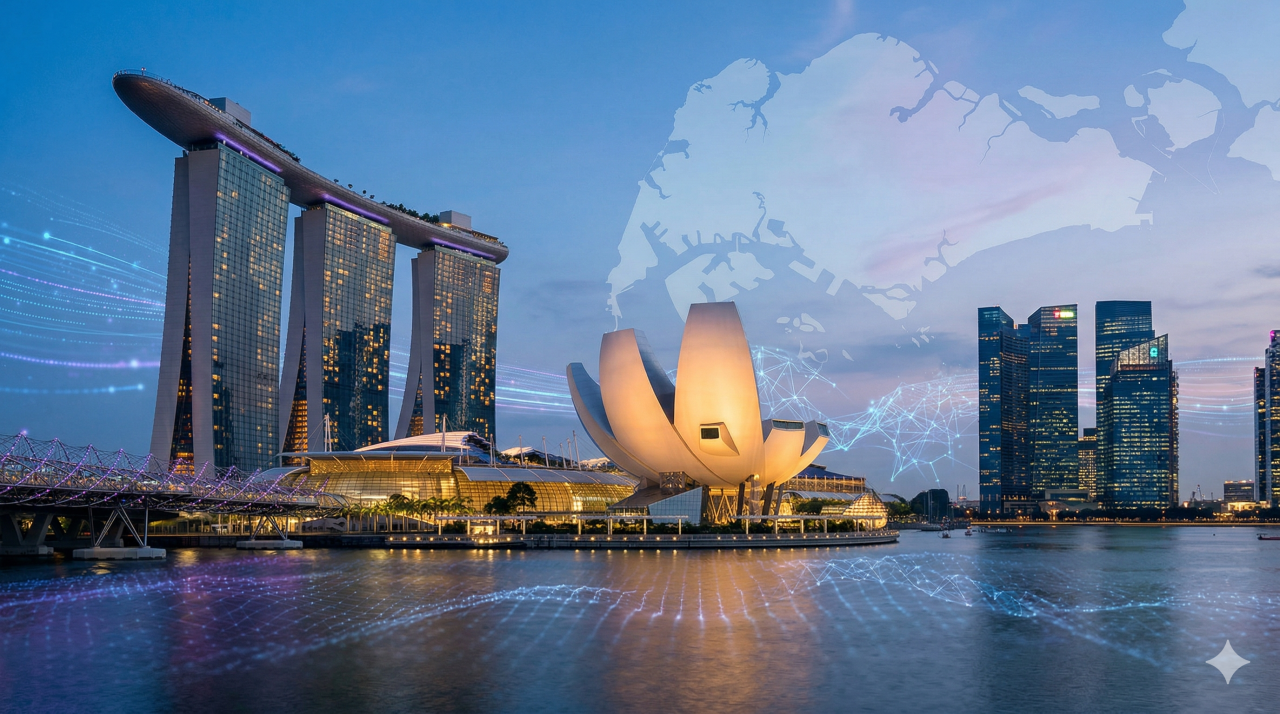
Singapore has long served as a hub for innovation and decision-making for global F&B leaders such as Nestlé, Mondelēz, and PepsiCo. At the same time, it has emerged as a key AI hub—NVIDIA has established the headquarters of its global AI technology center network there, and Heineken has launched its first AI lab in Singapore. This progress is underpinned by a systematic investment in AI talent and capabilities since 2017, with the national initiative AI Singapore playing a pivotal role.
In marketing, the challenge has shifted from “whether to use AI” to “how to build, integrate, and sustain AI capabilities.” In reality, many teams still rely on tools, external agencies, or a few individuals, making it difficult to embed AI as an organizational capability.
Sengmeng, who previously worked at NVIDIA, has been involved in national AI capability building as well as the development of global standards such as ISO and IEEE. He has also contributed to the advancement of professional roles such as Chartered AI Engineers and Certified AI Practitioners.
In this session, he will explore:
- Which AI capabilities should be built internally for long-term advantage?
- How can AI evolve from individual expertise into organizational capability?
- How can capability frameworks and talent structures translate AI investment into real business impact?


With consumer segmentation accelerating, the target audiences for food and beverage brands are more diverse than ever—spanning generations, lifestyles, and value systems, with increasingly refined demands. Against this backdrop, how can packaging precisely resonate with the aesthetics and value orientations of distinct consumer segments? In the instant interplay between rational choice and emotional impulse, how can brands compel different groups to pause and engage? Grounded in consumer insight, brands can systematize color, structure, and cultural codes to build packaging strategies tailored to varied demographics and consumption contexts.

Research shows that purchase decisions made in front of the shelf are rarely the result of rational analysis. In fact, within just 0.3 seconds, the brain forms a subconscious judgment. Color, shape, material, and the way information is presented all influence how consumers instinctively perceive taste, quality, and trust.
This session explores packaging design through the lens of neuroscience, revealing how the brain processes visual cues, forms instant impressions, and drives purchase behavior at first glance. By analyzing popular packaging cases on the market, it uncovers what they get right at a perceptual level, while also highlighting "counter-intuitive" design pitfalls that can trigger instinctive resistance. Through this training, brand and design teams will learn how to communicate taste and value more effectively, making packaging work harder with less effort.

From material selection and structural development to prototyping and mass production, packaging involves multiple suppliers and complex processes. Limited transparency, high communication costs, and long development cycles often become hidden bottlenecks for product innovation. Digital platforms are changing this. By integrating packaging factories, equipment, and technical resources, and enabling tools such as online factory audits, intelligent supplier matching, and supply chain collaboration, brands can identify the right partners more efficiently and speed up packaging development. This session will explore key efficiency challenges in the packaging supply chain and how digital platforms help brands bring innovations to market faster.

Packaging is more than an information carrie. It can have a human personality. In a world of information overload, emotion, not logic, captures attention. Designs that connect emotionally convey a brand story most authentically.
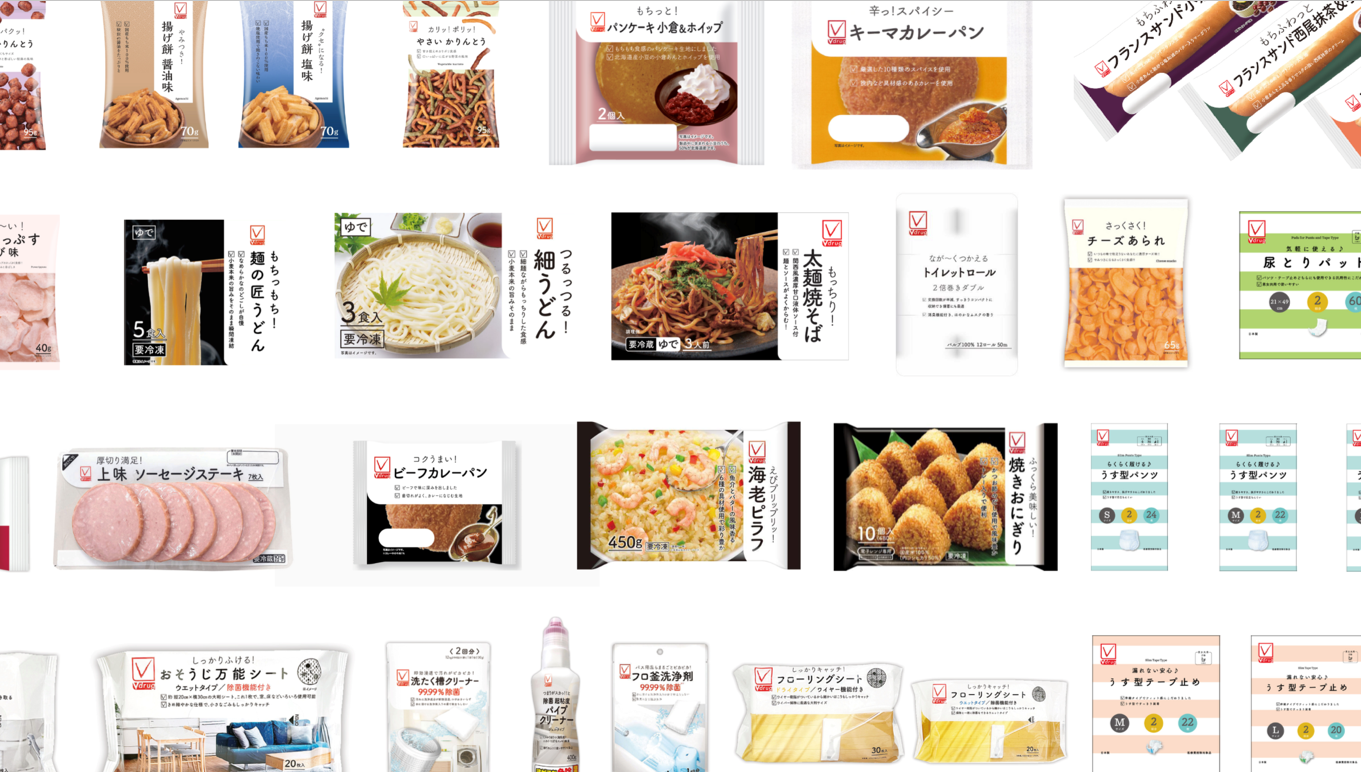
(Source: Koichi Kosugi)

Make the product the main character, give it expressions and a setting, and hide a "tiny" bit of detail, then illustration can bring food to life. From HBAF nuts to SAJO’s 365.24 series, Korean designer Jung Eun captures brand personality through her human-touch illustration style. Within these cartoon figures, you can almost see the flavor, ingredients, even the making and eating process of the food itself.
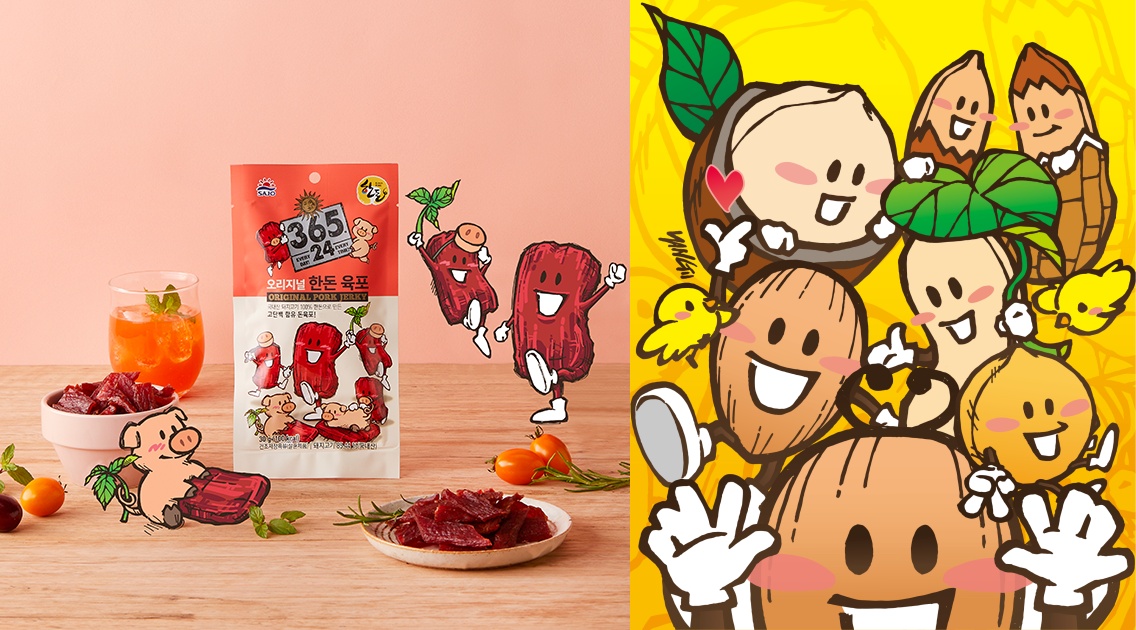
(Source: HBAF)

In today's image-driven F&B market, type is more than information, it conveys brand emotion. With deep industry expertise, FounderType provides professional typography solutions that enhance product premiumization and recognition. FounderType will present the application aesthetics of F&B typography and introduces TigerPanandFounderType, a packaging typeface co-created with designer Tiger Pan. Blending handwritten expression with commercial precision, it helps brands break visual sameness and shows how typography can become a silent salesperson.


PepsiCo, a brand always close to youth culture, has recently updated its visual identity, from the "smile" logo to the sunny Fanta emblem. Each refresh preserves core brand assets while creating a look and feel that resonates with contemporary aesthetics and culture. Brand refresh is not about chasing trends, but understanding the audience and forging new ways to communicate. Using Mirinda's latest refresh as a case study, we'll explore the design logic and strategic approach behind Pepsi’s youth-focused branding.
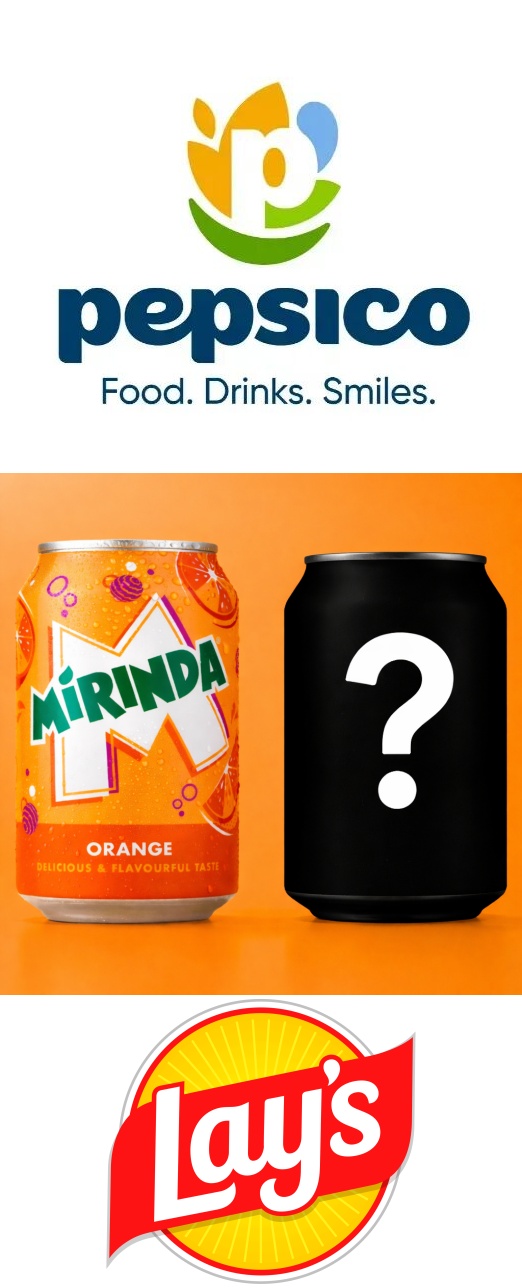
(Source: PepsiCo)

Blue Bottle Coffee is famous for its minimalism, but the real story is that founder James Freeman didn't want a brand at all. He wanted people to walk in, taste the coffee, and feel changed by it. Nothing more. Danielle's talk will walk us through that history: what began as a scrappy farmers market coffee stand in Oakland, California, with only a blue bottle logo hand-painted by a friend on a simple kraft bag, grew into something that needed a real design system. In 2014, Danielle Harris joined as the company's first in-house designer, inheriting that humble symbol and tasked with translating James's vision of "no brand" into one that could scale. What the world now calls iconic minimalism was really just a disciplined refusal to add noise. That, it turns out, is the hardest brief of all.

Private labels first emerged in Europe in the last century. Compared with national brands, they have typically been positioned around strong value for money, mass appeal, and consistent quality, becoming a core pillar of modern retail systems. Unlike the price-led strategies seen in more mature markets, China’s private labels are increasingly defined by premiumisation, curated selection, and differentiated innovation.
Drawing on over 20 years of global insight and experience from partnering with some of the world’s most beloved retailers—including Target, Waitrose, Aldi, Carrefour, CVS, BJ's, and Fortnum & Mason—Jonathan will share three key principles to unlock the "three leaps" in private label design systems, grounded in both global practice and China’s evolving retail landscape.
For many beverages sensitive to contamination, canned packaging has traditionally relied on retort processing—heating sealed cans to ensure safety. While effective, this high-temperature treatment can affect taste and aroma and may limit formulation options. To reduce heat exposure and better preserve product quality, GEA developed the AseptiCan aseptic can filling system. It enables high-acid or low-acid beverages, still or carbonated, to be filled into aluminum cans under aseptic conditions. This session will explore how aseptic can filling technology can be applied in beverage production, how it expands formulation flexibility for brands, and how it supports different can formats.

In the food industry, fewer than 5% of new products succeed despite heavy investment. As price competition intensifies, innovation is key—but how can it be brought to market faster and more reliably? How can promising products win the “last mile” of launch? Packaging and supply chain capabilities play a critical role.
This session brings together 15+ brand packaging leaders and 15+ equipment and packaging suppliers to explore key factors across the development process, from R&D to collaboration models—identifying what drives speed and success in product launches.
Brands will gain clearer strategies for supply chain collaboration, while suppliers will better understand brand needs and market dynamics. By breaking silos and reshaping partnerships, the industry can move from isolated optimization to true co-creation, improving the success rate of new products.

































Traditional hypermarket models are facing systemic challenges, leaving little room for trial and error in decision-making. At this critical juncture, Paul She has stepped forward to undertake the core mission of restructuring Yonghui's competitiveness through merchandise. From the standardized management of foreign retail systems to the efficiency-driven models of domestic new retail, and now to the deep transformation of traditional supermarkets, he has traversed three distinct retail paradigms, developing a merchandise philosophy that is both systematic and practical. In Yonghui’s transformation—a journey of survival and reconstruction—this consistently humble and restrained retail veteran is attempting to turn the tide alongside his teammates using clearer merchandise logic. Amidst the highly anticipated "Pang Dong Lai-style adjustments," every move by Yonghui remains under the spotlight. In this session, Paul She will not shy away from the challenges, offering a direct response regarding the practices and reflections behind this transformation.

After four consecutive months of using Dingdong Maicai, I have reached a conclusion: Dingdong’s private label system deserves a serious deconstruction. At the strong recommendation of two business unit heads, we have invited the true architect and driver behind this private label system—Jonathan Shen.
Starting from a systematic study of retail paradigms such as Trader Joe’s, Whole Foods Market, and ALDI, Jonathan Shen pioneered the private label strategy in 2020. For him, private labels are not just a means to improve gross margins, but a way to build a "sustainable treasure hunt experience" within high-frequency consumption—ensuring that every time a user opens the app, they may encounter unexpected yet repurchase-worthy products.
In 2025, the scale of Dingdong’s private labels surpassed 5.5 billion RMB (for comparison, Pang Dong Lai’s private label sales in 2025 were approximately 6.4 billion RMB). Behind this figure is not a series of isolated "hero products," but a systematic capability revolving around supply chain integration, user insight, and organizational synergy: balancing efficiency with the continuous creation of a "sense of discovery." Starting from frontline practice, this session will deconstruct the underlying logic and methodological path of Dingdong’s private labels, exploring how private labels have become a core variable in retail competition amidst a highly fragmented channel environment.

Shaoming is the former Vice President of Dingdong Fresh, where he was responsible for international market expansion. This topic stems from his firsthand visits to markets including China, the United States, the Middle East, Southeast Asia, Europe, and Russia, as well as his in-depth exchanges with Key Accounts (KA). This session will compare the real-world applications of AI across different retail systems, presenting differentiated paths in product selection, pricing, and supply chain management. At the same time, it will deconstruct the key reasons behind these differences: which capabilities AI is truly amplifying and which problems it is exposing.

The snack sections in traditional hypermarkets are losing their appeal. However, once "snacks" are decoupled from hypermarkets and transformed into an independent format, the situation changes completely. Discount snack stores use efficiency to reconstruct price perception, while fresh snack stores use "made-on-site + short shelf life" to rebuild quality and experience. Snacks are evolving from a "supplementary category" into a core track that can be operated and scaled independently. This is precisely why a fresh snack format like Mama Pu is particularly worth studying.
A 280-square-meter store generating 2.5 million in a single month. From its store model to the product experience, Pumama is validating a new possibility: the future of snack stores lies not only in cost-effectiveness but also in a sense of freshness.

For many, browsing through Olé feels like embarking on a "curated journey" of life’s finest moments.
Whether it’s the sophisticated packaging of a unique flavor, the aromatic allure of the bakery, or the accidental discovery of a global gem, there is always something to instantly lift the spirit. Why do certain products hold the "center stage" in premium retail for so long? How does Olé stay one step ahead, presenting those unspoken, instinctive desires right before your eyes?
Selection is never just a cold screening of SKUs; it is a soulful gambit centered on "value." This session will take us behind the shelves, using engaging, insightful, and heartfelt real-world cases to penetrate the core of premium retail selection.
This is more than a sharing of "how to choose"—it is a masterclass in "reading the human heart" and "creating a sense of surprise and fulfillment through expertise." Join us to hear how Olé transforms every single product into a bridge of emotional resonance with its customers.

City'super has always adhered to a "slower" and more difficult-to-replicate path—placing buyers at the core to build deep understanding and judgment of merchandise. What it sells has never been just the products themselves, but a curated, organized, and expressed lifestyle proposal.
In this session, Candy will provide an insider's perspective from a frontline buyer, using city'super’s practices as a case study to deconstruct a truly implementable buyer-based system. She will explore how to transition from being "experience-driven" to "system-driven," and how to build a continuously evolving closed-loop merchandise capability through demand definition, global radar sourcing, localization adaptation, and data review.


Chris is one of the few leaders who has completed the full journey from frontline buyer to group CEO. Before stepping into the CEO role, he spent years at the very front line of merchandise decisions, personally making countless judgments on whether a product should be listed. As his role shifted toward group management and corporate leadership, the challenge he faced was no longer the success of a single product, but how to enable the organization to continue making sound product decisions over the long term.
In this session, Chris will draw on his experience transitioning from an individual decision-maker to an organizational leader, sharing how he transformed experience- and intuition-driven personal judgment into organizational capabilities that can be replicated and continuously calibrated. He will also explore how retail companies should make trade-offs between speed, scale, and long-term value while pursuing differentiation and breakout products.
This is not a methodology-focused talk on “how to create bestsellers”, but a discussion on how judgment can be embedded into systems—and amplified sustainably within an organization.

At the recently announced 2026 Superior Taste Award, eight core products from METRO Chef (Maizhenxuan) stood out. Two received the highest distinction of Three Stars for Exceptional Taste, while several others were awarded Two Stars for Remarkable Taste and One Star for Notable Quality.
What impressed us about Alex is his consistent belief that products are something worth taking seriously. In his work, products are not vehicles for KPIs, but a series of questions that must be asked again and again: What does “truly delicious” mean? What kind of health actually matters? Which flavors are worth standing by, and which choices—though seemingly correct—lack a soul and should be rejected? These judgments do not stop at philosophy; they are embedded in everyday practices of assortment decisions, product choices, and organizational collaboration.
What Alex represents is not a formula for quickly replicating bestsellers, but a product value system that is becoming increasingly rare in the industry—one that builds standards of judgment from personal taste, drives organizational decisions from real experience, and preserves the dignity of the product itself even under pressure from cost and efficiency. This devotion to product is not loud, but it is enduring and consistent.

In MUJI's framework, the product itself is an integral part of its brand language — from material selection and design philosophy to product architecture, every element continuously shapes brand mindshare.

In the past, the core competitiveness of convenience stores lay in point density (proximity to you), standardized products (availability at any time), and operational efficiency (replenishment, turnover, and shrinkage control). FamilyMart has been in Mainland China for 20 years, with nearly 3,000 stores. However, in an era of "ubiquitous availability," merchandisers need to think ahead of their customers and address new questions: Why am I willing to buy? Why do I want to share this on social media? Why am I willing to come back every day?
FamilyMart's recent series of posters may already provide some answers. In this session, Sara will draw from FamilyMart's practices to explore where the "next stop" for convenience stores will lead within this complex and fiercely competitive channel environment.



A single shopping receipt captures real consumer behavior—where they shop, what they buy, and how they combine products.
Worldpanel will present the 2026 Full-Link F&B Insight Report, uncovering signals behind breakout products through the lens of people × category × scene.

A surge of new launches, faster cycles, shifting consumption scenarios—why is growth still hard to find?
From sugar-free tea to plant-based beverages, Flywheel has consistently captured emerging trends and turned them into winning concepts. In 2026, what new growth opportunities will "Orientalism" unlock—and how can successful launches become repeatable?

When a category reaches saturation, simply changing flavors is no longer enough.
IDEO applied a human-centered approach to co-develop Master Kong's "Special Fresh" instant noodles, achieving 100,000 units sold in just three days.
From user insight to brand positioning and long-term product strategy—what's the real methodology behind it?

More and more beverages are competing with water. Consumers are no longer just looking for taste—they want better hydration, less burden, and more everyday usability.
In this context, how should brands rethink beverage innovation?



Bull-Dog Sauce—Japan’s No.1 sauce manufacturer for many consecutive years—has, over the past 120 years, evolved from imitation to definition, and from a single product to a complete system.

After its spin-off, Magnum has demonstrated greater agility, achieving double-digit growth in China in 2025. In 2026, nearly 30 new products will be launched across multiple brands, focusing on premiumization, occasions, and health.
As "frozen snacks" emerge as a new growth space, how can ice cream move beyond dessert and become part of everyday consumption? And how can local insights and product innovation turn brand promises into tangible experiences?

A Shanghai-based chocolate brand has won 25 international awards in a single year.
Nibbo produces chocolate directly from cocoa beans, using single-origin cacao without blending, creating highly distinctive flavors.
Is it truly exceptional? One bite will tell.
Behind its award-winning success, Nibbo is pushing forward a new approach to flavor innovation. By sourcing from premium global origins while integrating local cultural expression, the brand redefines chocolate as both a sensory and cultural experience.

In just 16 months, its "DaMoWang Sesame Sauce Vegetarian Tripes" surpassed ¥100 million in monthly sales, setting a new industry record.
How did Liubiju transform traditional craftsmanship into a scalable blockbuster product?

Super Dessert reimagined the nut category with a designer's mindset. Its crispy nut series quickly became a top trend on Rednote and Tiktok.
For designers, great snacks are not just tasty—they also need to look good, photograph well, and spread easily.

In many scenarios, health and convenience are hard to balance, and high-quality ingredients remain out of reach for daily consumption.
Through product format and process innovation, Twelve Summers makes it possible to enjoy a clean, tasty, and accessible meal—ready to eat, anytime.
As consumer needs diversify, how should we define “convenient health food”? And how can products deliver better taste, nutrition, and accessibility at the same time?

A single "Good Night Drink" topped Hema's repurchase list.
By tapping into the "light buzz" trend—low alcohol, self-indulgence, and flexible occasions—Gaosheng is reshaping how young consumers drink.

Pop Mart's "Starry Ice Cream" sold out—not just because of taste.
More brands are combining characters, emotions, and products, turning consumption into self-expression.
IP is redefining the value of food and beverages.


Have you ever wondered what would happen if we turned young people's bold ideas directly into products? When those seemingly wild concepts connect with real needs, could the next breakout product be hiding among them?
This time, we're bringing those ideas to the stage.
After an open call and two rounds of evaluation, seven teams from leading universities—including Zhejiang University, Shanghai Jiao Tong University, and L'École de Design Nantes Atlantique—will present their concepts at the Product Development Talks. Students from food science, communications, and design are all tackling one question: what could the future of food and beverage look like?
More importantly, these ideas won't just be on display. A jury from OATLY, the Food Design Lab at Tsinghua Academy of Arts & Design, and Unusual Service will provide live feedback—selecting the concepts with real potential to take off.




In this “new commercial world”, growth no longer comes from isolated breakthroughs, but from the reinvention of systems.
Capital is reshaping systems, retail is refining them, and AI is amplifying them — while brands and design ultimately determine how these systems are perceived and remembered.

It is becoming increasingly difficult to turn a profit in the Chinese market. From McDonald's and Yum! to Starbucks today, more and more foreign enterprises are handing over control, entrusting their heaviest and most complex operations to local teams. Behind this trend lies more than just a simple “transaction”—it represents a fundamental shift in roles.
For Chinese capital and operations teams, this is undoubtedly an opportunity, but it comes with a reality check: you are inheriting not just a reputable brand, but also immense growth pressure and a significant “brand royalty.” More importantly, the Chinese market today can no longer be navigated solely by a set of headquarters' SOPs; many decisions must be judged and owned locally.
Consequently, the questions have become very direct: How deep should investors get into the “playing field”? What is the systemic capability that truly supports a scale of ten thousand stores? Which breakthroughs in key capabilities allow a brand to truly keep pace, or even rebuild its competitive edge?


As different retail channels come to play distinct roles in consumers’ minds—some representing value for money, others curated quality, and still others speed and instant fulfillment—the core question for brands has shifted accordingly. The challenge is no longer “where to sell,” but how a brand is understood and remembered within each channel.
Within this discussion, we will explore how brands can rebuild their product portfolios and channel strategies based on their positioning in consumer mindsets: which products should serve as vehicles for brand meaning, and which are designed to drive scale and efficiency; how supply-chain flexibility can support the differing rhythms and requirements of each channel; and how deeper forms of brand–retailer co-creation can establish clear and enduring divisions of cognitive roles.
In a highly diversified channel landscape, brands with true growth potential no longer attempt to cover every channel with a single, undifferentiated product. Instead, they learn to express a consistent brand identity through differentiated, intelligible product offerings, tailored to the specific logic of each channel.




In the Chinese market—arguably the most competitive in the world—the logic of scaling is undergoing a fundamental shift. In the past, a clear brand positioning combined with a standardized operational system was sufficient to support rapid enterprise expansion. Today, however, as local companies fully evolve across product, channel, and operational dimensions, the traditional "macro-framework advantage" is being rapidly eroded.
The factor that truly creates a gap is no longer whether the direction is correct, but rather the density of capabilities—an enterprise's ability to continuously achieve refined upgrades across every critical dimension. From consumer insights and product innovation to supply chain management, pricing, channel rhythm, and user experience, every link is being polished and interconnected to form a higher-density, sustainably scalable capability system. Consequently, growth in scale no longer stems from the amplification of a single capability, but from the systemic synergy of these combined strengths.

In a market where products are increasingly similar in function and channels are more segmented than ever, design and aesthetics are no longer just “the packaging”—they are the language through which brands express value, build emotional connection, and earn long-term loyalty. This session will explore how global and local brands can craft a coherent design language, embed cultural relevance, and balance short-term market demands with long-term brand equity—shaping a future where food and beverage brands are not just consumed, but experienced.
In the world of food science, Rochelle Hua once followed what many would consider a “textbook success path.” She graduated with First-Class Honours in Food Science in Singapore, worked in R&D at Nestlé and Abbott, and became one of the fastest-promoted food scientists within the organizations. She later joined McKinsey & Company, where she worked on several high-intensity, results-driven business projects.
By her early thirties, she had already reached a seven-figure annual income. At 37, she got married and became a mother. It was also during this period that she began to revisit a deeper question:
When professional capability has already been fully proven, must one continue to remain within the same model of success? After leaving the corporate world, Rochelle chose a path that appears “smaller” but deeply intentional: opening a soup shop in Shenzhen and becoming its owner, while also sharing insights as a personal blogger—using the lens of food science to explain the everyday yet essential act of eating.

During his nearly two decades at JD.com, Yishen Tang witnessed and shaped many of the defining moments of China’s e-commerce and retail evolution. From telecommunications and automotive to fresh food, he led businesses from 0 to 1, managed large-scale teams, and operated at a billion-RMB scale — gaining deep experience in platform efficiency, scale, and supply chain integration.
Yet at the peak of his career, he made an unexpected “reverse choice”: leaving the platform to start from scratch and build a highly focused low-GI food brand, Detective 55.
Since its founding in 2022, from launching its first low-GI oat bran product to gradually expanding its portfolio, building an integrated supply chain, and introducing its 2.0 brand upgrade with the concept of “intelligent glucose control,” Detective 55 is not a business driven by rapid scale. Instead, it represents a long-term commitment to health, patience, and sustainable value creation.

In May 2025, a new standard on Coloring Foods (clean label colors) went into effect in China, stating that coloring foods must come from fruits, vegetables, plants, or algae, ensuring transparency and safety.
• In a visual-first market, food & beverages must stand out, and plant-based colors deliver vibrant, eye-catching appeal.
• The new regulation aligns perfectly with Chinese consumers’ growing demand for natural, clean-label ingredients, moving away from artificial ingredients and colors.
• For beverage manufacturers, this is a strategic opportunity to capture attention with bright, natural hues that resonate with modern consumer values.
• Plant-based colors help brands differentiate, build trust, and thrive in a highly competitive beverage industry.

Advanced inspection technologies are no longer merely quality control tools, but key enablers driving product innovation. They help enterprises break through the constraints of traditional formulations, realize complex packaging designs, and optimize new production processes, thus opening up new horizons in the fierce market competition.

In fine dining, desserts are often meticulously designed and tightly controlled experiences created for a limited number of guests. Frozen desserts, by contrast, may appear casual and everyday—yet they are more direct, more demanding, and far less forgiving of technical shortcomings.
Leafy Ng, founder of di-solve, is a chef and product developer with more than a decade of international culinary experience. He previously served as Executive Pastry Chef at a Michelin-starred restaurant and brings together a strong background in food science with a cross-cultural understanding of cuisine. He is also the Asia-Pacific brand ambassador for Sosa.
After founding di-solve, Leafy made a counterintuitive choice: introducing the systematic approach of fine dining—covering texture, structure, flavor layering, and even alcohol applications—into everyday treats like gelato and sorbet. The goal is not culinary showmanship, but to make thoughtfully crafted flavors accessible to more people.
The F&B industry competition has shifted from product-level differences to a battle for "Cultural Identity and Sensory Experience." Today, formulas and packaging alone cannot drive long-term growth. Focusing on the logic of "From Culture to Senses," this session explores how to use sensory and semiotic research to decode the cultural drivers of consumer behavior in the Asia-Pacific and China. It bridges the gap between cross-market insights and actionable local innovation.
Highlighting the global expansion challenges of Chinese brands, the speaker will discuss how to leverage sensory experiences and multi-market perspectives to create resilient, forward-looking innovation strategies while staying rooted in cultural identity.

The low-GI market is experiencing rapid growth, yet a key industry challenge remains: products are perceived as healthy but difficult to consume consistently. Many formulations meet glycemic index requirements at the expense of taste and overall eating experience, resulting in low repeat purchase rates. This session will focus on glycemic control mechanisms, formulation design, and industrial implementation, combining experimental data and practical case studies to explore how to achieve both low GI and great taste — driving healthy carbohydrates from function-oriented development toward comprehensive experience enhancement.

Dr. Meng Li previously served as a Product Director at a Silicon Valley-based food unicorn valued at approximately $1 billion, where she led a product that scaled to around $400 million revenue over six years. Through years of hands-on experience, she came to believe that the United States represented the ceiling in food innovation, brand marketing, and scale-up.
In 2024, she returned to China as a senior advisor. Expecting to “bring back advanced experience”, she instead encountered a sharp reversal in perspective. Chinese companies, she observed, are now operating at a different level in terms of product iteration speed, supply chain responsiveness, and ingredient and process innovation. At the same time, she noticed a subtle but meaningful shift in the U.S. market: in the city where she has long lived, more China-made food products are appearing on retail shelves, and American consumers are becoming increasingly open to “Made in China”.
In this talk, Meng will not focus on tactical “how-to” strategies for Chinese food exporting. Instead, she will reflect on the moments that challenged her assumptions and reshaped her thinking, and explore a more fundamental question: as China’s capabilities in the food industry continue to advance, when and how, will their true global value be fully recognized?
While most brands are still asking what the next viral ice cream should look like, NiCEME starts with a simpler—but harder to quantify—question: Is it fun?
NiCEME calls its R&D philosophy “Joyful Food Play.” Instead of reverse-engineering products from flavor parameters or cost targets, the team develops them forward from a complete themed world: “NiCEME’s Fried Chicken Shop,” “NiCEME’s Farm,” and more. Chicken legs, burgers, fries, carrots—symbols usually found in fast-food restaurants or markets—are transformed into ice cream products that live inside convenience store freezers, designed to be photographed, shared, and talked about.
Founder Daniel, who previously worked in the luxury and retail sectors, approaches branding not as the creation of a single viral product but as the ongoing construction of a participatory content universe for young consumers. Under his leadership, a post-90s founder and post-00s R&D team have turned the convenience store into a creative stage. As a result, NiCEME hasn’t just produced one hit product—it has become a brand that consumers repeatedly “discover” and share again and again.


SYNBIO® is a patented blend of two strains: Lacticaseibacillus rhamnosus IMC 501® and Lacticaseibacillus paracasei IMC 502®. These two strains were isolated from healthy centenarians living in one of the world’s longevity regions.
A selected certified strain of Streptococcus thermophilus, isolated from traditional Greek yoghurt produced in the Attica region and certified by the University of Athens.
A clean-label yogurt solution delivering a pure taste profile with smooth, creamy texture and natural sweetness, without additives.

In the food industry, design is often dismissed as a “last-mile” polish. But for Lu Yuyang and the Shudao team, an aesthetic background is merely the entry ticket; true design thinking is embedded deep within the supply chain. Refusing to be just another “asset-light” brand, they chose the hard path: building their own factories. What kind of product vitality erupts when design thinking is held accountable not just for visuals, but for flavor consistency, flexible manufacturing, and scalable delivery?
In an era of abundance, the food industry's growth engine has shifted from functional benefits to emotional resonance. While ordinary biscuits are trapped in supermarket price wars, “Blessing Biscuits” achieved a breakthrough—selling 10,000 tins monthly at a premium price of 38 RMB—by leveraging the unique context of temple blessings. Today’s consumers are no longer just buying food; they are investing in “experiential value.” This session will deconstruct how Scene Reconstruction and Cultural Embedding allow products to break free from cost-based pricing and exponentially amplify brand value.
The rapid rise of China’s gummy exports reflects the country’s growing manufacturing strength. Yichao Health now serves clients in 80+ countries and regions across North America, Europe, and Asia-Pacific, becoming China’s No.1 gummy exporter and challenging the perception of Chinese gummies as low-end OEM products.
Backed by continuous R&D innovation and a full-chain quality control system, the company adapts to global market needs while maintaining high production standards. Its ambition is to further expand internationally and elevate the global recognition of China-made nutritional gummies.

Today, consumption is being redefined by younger generations. They look beyond functionality, seeking attitude, aesthetics, and emotional resonance. They prefer simplicity over excessive packaging, value sustainability, and embrace personal expression—shifts that are reshaping the direction of packaging design.
This session connects changing consumer mindsets with emerging design trends, exploring how minimalism, lightweight formats, emotional appeal, and interactivity have emerged in response. Packaging is no longer just a container; it has become the first language through which brands communicate with young consumers.